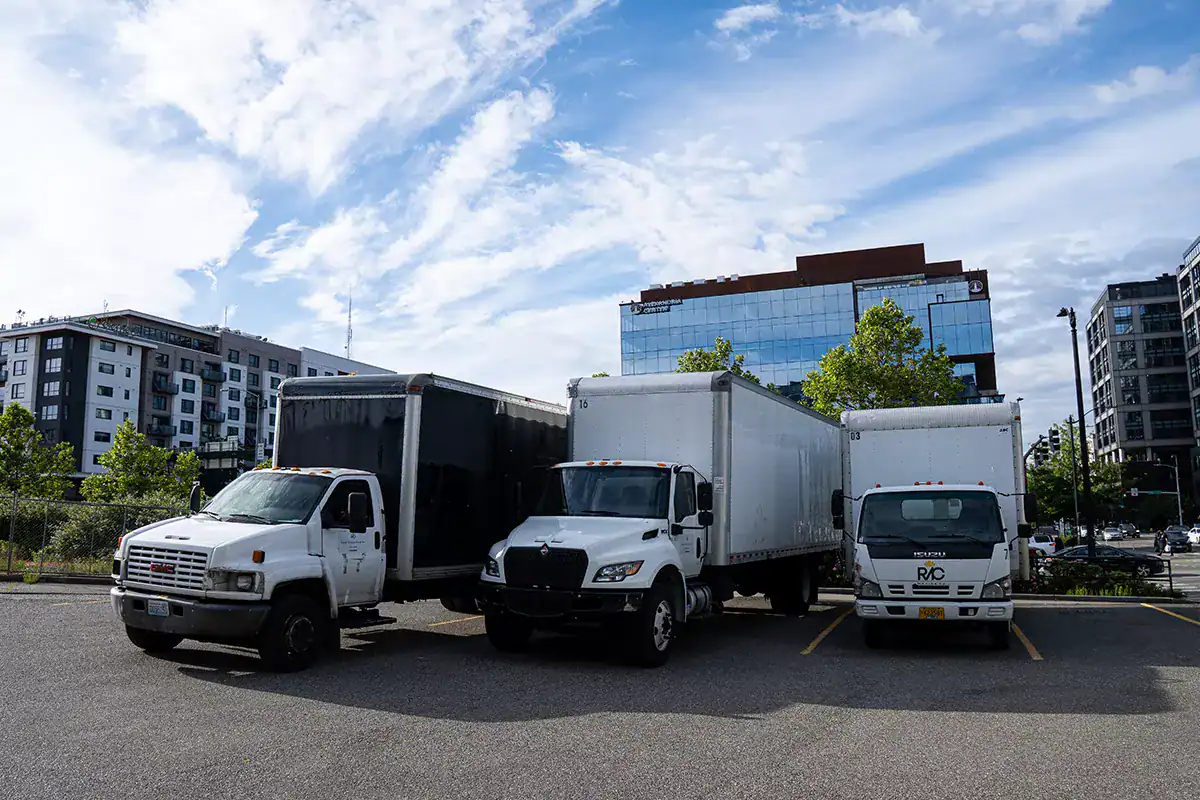
A ten-person company feels a move more than a corporation does. There is no facilities department, no slack in the week, and every closed hour is your own revenue. We move shops, studios, clinics, and small offices in the gaps your customers never see, on flat budgets a small business can actually plan around. The plan is sized to the business: no corporate overhead, no corporate invoice.
The labeling, sequencing, and after-hours execution of a corporate move, scaled honestly to a business that fits in two trucks.
The Owner Should Not Be the Move Coordinator
In most small business moves, the owner ends up project-managing the relocation between serving customers, and both suffer for it. Royalty Moving & Storage takes the whole problem: a site visit that counts the real inventory, fixtures, stock, equipment, the back room nobody has audited, a flat written price a small budget can rely on, and a schedule built around your trading hours rather than ours. Evenings, weekends, and overnight windows are the norm, not a premium. The site visit is free, takes under an hour, and usually surfaces two or three problems that are cheap to solve in advance and expensive to discover on the day.
Execution borrows from our corporate playbook at small-business scale: everything labeled to a destination, fragile stock and equipment packed to commercial standard, and the new space set up so you can trade the next morning. Retail shelving rebuilds, studio equipment reconnects to your plan, and the sign on the door says open. If the landlord requires insurance certificates or after-hours access arrangements, those are handled with the property manager directly, one less thing between you and reopening.
Six small-business realities the plan covers before move day. Every one of these has wrecked somebody's reopening week; the plan exists so none of them wreck yours.
Trading-Hours Protection
The move runs after close, before open, or across a weekend, so the revenue calendar barely notices it happened. The reopening hour is in the plan before the packing tape is.
Stock and Inventory
Products counted, boxed, and labeled by category, so the first restock at the new location is shelving, not detective work. Perishables and dated stock get flagged for a transfer plan of their own.
Fixtures and Shelving
Displays, racks, counters, and signage come down, travel safe, and rebuild to your new floor plan.
Equipment Care
Espresso machines, salon stations, clinic equipment, and studio gear move with the handling their price tags demand. Reconnection happens to your equipment vendor's spec where one exists.
Lease-Date Squeeze
Old lease ends Friday, new one starts Monday: the timing is tight and the plan is built precisely to it.
Customer Communication
We hit the dates you announce, because a small business's reopening promise is marketing you cannot refund.
Four steps between two storefronts, with trading protected throughout. Most small business moves complete inside a single weekend window, including the rebuild.
01
Site Visit
We see the space, the stock, and the equipment, and learn your hours and dates.
02
Flat Plan and Price
One written number and a schedule built around your trading calendar.
03
After-Hours Move
Labeled, packed, and relocated in the windows your customers never see.
04
Open On Time
Fixtures rebuilt, stock staged, equipment placed: trading resumes on schedule.
Small business crews serve every commercial strip in the metro, from Seattle neighborhood storefronts to Eastside suites and south-end studios. Multi-location small businesses, the second shop, the satellite studio, get the same plan across every address.
A Planned Business Move vs. A Long Weekend of Chaos
The DIY business move costs more than it saves, just not on the invoice. Owners who have done the DIY version once become our most loyal clients, usually while describing their backs.
Typical Movers
The DIY weekend
The owner and staff hauling boxes between shifts
Stock packed unlabeled, restocked by memory
The espresso machine riding in a hatchback
Reopening day slips, and customers notice
No coverage when equipment meets pavement
Royalty Moving & Storage
The planned move
Staff rest while a crew does the lifting
Inventory labeled by category, shelved fast
Equipment handled to commercial standard
The announced reopening date holds
Licensed, insured, and accountable throughout
Included With Small Business Moving
The standard scope, flat priced.
After-Hours Crews
Evenings and weekends as the default, not a surcharge.
Inventory Labeling
Stock and fixtures mapped to the new layout.
Equipment Handling
Commercial-grade care for the tools of your trade.
Fixture Rebuild
Shelving, displays, and counters reassembled to plan.
One Flat Price
A number a small budget can rely on, in writing.
Licensed and Insured
Washington UBI #605117720 and permit THG070945.
Move the Business Without Wearing the Move
One site visit, one flat price, and a reopening date that holds. Evenings and Saturdays work for the site visit too, because we know when owners are actually free.
1. How much does a small business move cost in Seattle?
Most shop, studio, and small-office moves price well below what owners fear, scaled to inventory and equipment rather than prestige. The site visit produces one flat written number, which matters doubly when the budget is your own. Owners are often surprised the number is closer to a large residential move than a corporate one.
2. Can we move without closing for business days?
Usually yes. The standard pattern is close Saturday evening, reopen Monday morning, with packing staged during quiet hours beforehand. Single-evening moves work for smaller spaces.
3. Do you move retail stock and fragile products?
Yes, packed and labeled by category to commercial standard, so restocking the new space is fast and nothing arrives as mystery boxes. High-value or fragile stock can ride under white-glove protocols inside the same move.
4. Can you handle our specialty equipment?
From espresso machines and salon stations to clinic and studio gear, equipment moves with appropriate handling and your reconnection plan in mind. Tell us the inventory at the site visit and the plan covers it.
5. Our lease dates leave a gap. What then?
Stock, fixtures, and equipment hold in our commercial storage between leases, on one inventory, and deliver the day your new keys work. Storage terms run month to month, so a two-week gap costs two weeks, not a quarter.
6. How far ahead should a small business book?
Two to three weeks covers most moves; month-end weekends fill first. Call (206) 278-2134 with your lease dates and we will anchor the schedule to them.
7. Are you licensed and insured for commercial work?
Yes. Royalty Moving & Storage operates under Washington UBI #605117720 and household goods permit THG070945, with the liability coverage landlords and property managers expect.