Bellevue in Context
The Numbers Behind Bellevue
Bellevue is a city of roughly 150,000 residents on the eastern shore of Lake Washington, directly across from Seattle via the I-90 and SR-520 floating bridges. I-405 runs north-south through the center of the city, and the 2 Line light rail connects downtown Bellevue and the Spring District across the lake. The city covers about 36 square miles from the lakefront to the Lake Hills and Eastgate plateaus, with Cougar Mountain rising at its southeastern edge.
Downtown Bellevue is the second-largest city center in the state. The neighborhoods around it range from settled single-family streets to some of the newest urban growth in the region.
Bellevue’s Story
The Eastside shoreline was part of the homeland of the Lake Washington peoples, whose villages and fishing sites lined the lake long before settlement. Homesteaders arrived in the 1860s and 1870s. By the early 20th century the community was known for its berry farms, many built by Japanese American families. Their forced removal during World War II ended that era abruptly and unjustly.
Meydenbauer Bay served as the winter moorage for the American Pacific Whaling Company fleet from 1919 to the early 1940s, an improbable chapter for a freshwater bay. The first Lake Washington floating bridge opened in 1940, Bellevue Square followed in 1946, and the city incorporated in 1953. The decades since turned a commuter suburb into a corporate and international center, with the technology boom of the 2000s and 2010s reshaping the skyline.
What Moving Day Looks Like in Bellevue
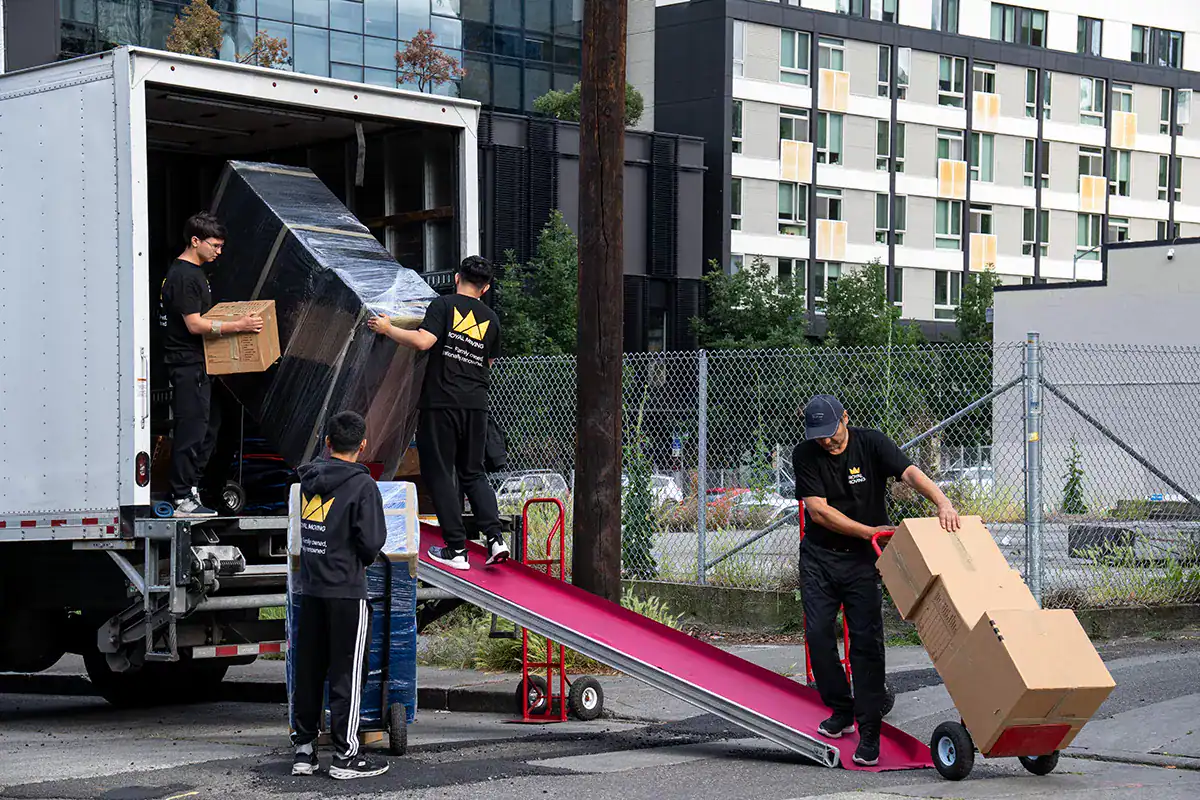
Downtown and Spring District moves are building-management moves. Certificates of insurance, freight elevator bookings, dock time limits, and protected corridors are standard, and we handle the paperwork and reservations before the truck arrives.
Neighborhood moves turn on geography. West Bellevue and Enatai streets drop toward the lake with slopes and mature trees. Lake Hills and Crossroads are flatter and more gridded. Newport Hills, Somerset, and Cougar Mountain involve real elevation, with view streets that can challenge a full-size truck. We scout the access and bring the right vehicles.
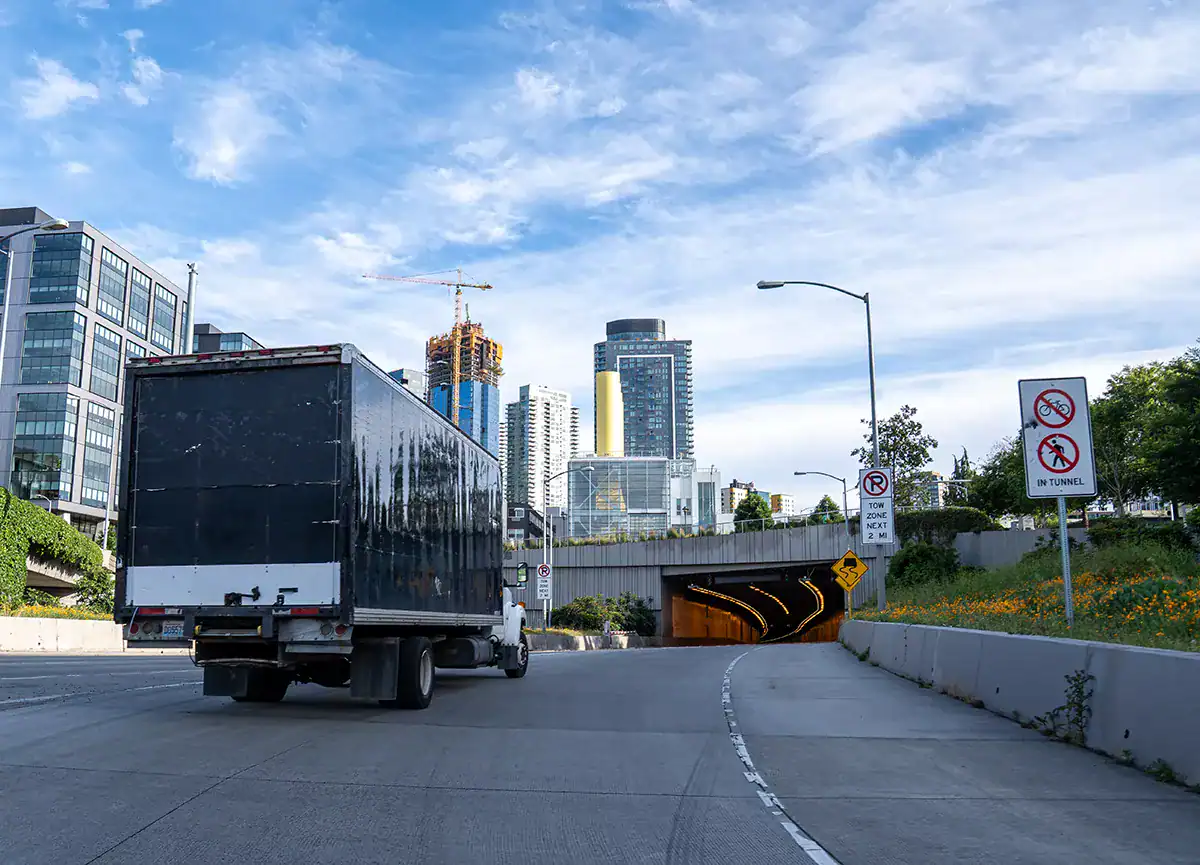
Traffic is the other variable. I-405 and the bridge approaches congest predictably, and we schedule crossing times so a lake-spanning move does not lose hours to it.