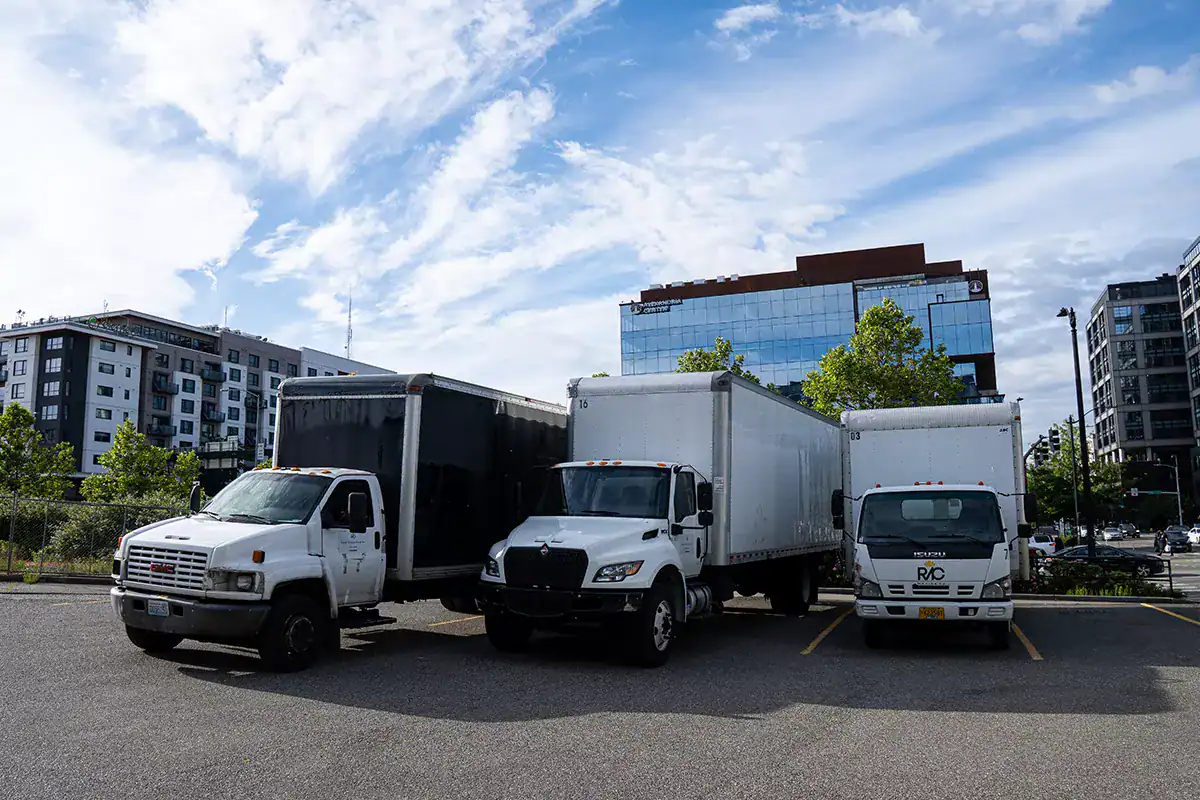
A restaurant move is an equipment move wearing an hospitality face: ranges, hoods-adjacent gear, refrigeration, prep tables, and a dining room's worth of furniture, all of it heavy, half of it delicate, and every closed day burning revenue. We move restaurants the way chefs run kitchens: in a strict order, with everything in its place. The plan is built backward from your reopening night, and every dark day in between is one we tried to remove.
A range is a gorilla, a slicer is a scalpel, and the walk-in panels are a puzzle. Each gets handled like what it is.
Every Dark Day Costs Covers. The Plan Counts Them.
Restaurant relocations live and die on sequencing. The kitchen cannot pack until the last service ends; the new space cannot cook until gas, power, and refrigeration are verified; and somewhere between those two facts sits a dark period you want measured in days, not weeks. Royalty Moving & Storage plans restaurant moves backward from your reopening date: equipment surveyed and prepped, refrigeration moved on a defrost-and-reconnect timeline coordinated with your technicians, and the dining room staged to reopen the moment the kitchen passes muster. Health-inspection realities get respected too: surfaces protected, equipment moved clean, and nothing handled in a way that complicates the new location's first walkthrough.
Crews handle commercial equipment weekly: ranges and ovens moved with the right gear and crew counts, slicers and mixers packed like the precision tools they are, glassware and plateware boxed to survive, and bar inventories counted out and counted in. Smallwares travel labeled by station, so the line sets up the way your cooks expect. Patio furniture, signage, art, and the dining room's whole personality move with the same care as the line, because the room is half the restaurant.
Six kitchen-world realities built into every restaurant plan. Each is learned from real kitchens, and each is in the plan before the last service ends.
Heavy Equipment Craft
Ranges, ovens, and fryers move with skates, ramps, and crew counts that respect six hundred pounds of steel.
Refrigeration Timing
Coolers and freezers travel on a defrost, transport, and restart timeline coordinated with your refrigeration tech. Product transfer planning, what moves cold, what gets used down, what gets donated, rides along with it.
Station-Labeled Smallwares
Pans, tools, and prep gear box by station, so the new line sets up exactly the way service muscle memory expects.
Glass and Plate Survival
Plateware, glassware, and barware pack in commercial dish boxes with the discipline a full dining room requires.
Bar Inventory Control
Bottles count out, travel sealed, and count back in. The bar's value rides on a list, not on trust.
Dark-Day Compression
The whole sequence aims at one number: the fewest possible days between last service and first ticket.
Restaurant crews work every dining district in the metro, from Seattle's neighborhood blocks to Eastside and south-end kitchens. Food trucks, commissaries, and catering operations get the same equipment-first treatment as full dining rooms.
A Sequenced Kitchen Move vs. A Truck Full of Steel
The kitchen will reopen either way. The question is how many dark days it costs. Every chef knows a reopening horror story; the sequence exists so yours stays a story you heard.
Typical Movers
The unsequenced move
Refrigeration moved warm, restarted wrong, stock lost
The range muscled by movers who guessed the weight
Smallwares in mystery boxes the cooks excavate for days
Glassware packed like books, arriving like gravel
A reopening date that drifts a week past the announcement
Royalty Moving & Storage
The sequenced move
Defrost and restart timed with your refrigeration tech
Heavy equipment moved with skates, ramps, and real crews
Every station's tools labeled to its new home
Commercial dish-pack discipline on all breakables
A dark period planned in days and kept there
Included With Restaurant Moving
The hospitality standard, in writing.
Equipment Crews
Skates, ramps, and counts sized to commercial steel.
Refrigeration Plan
Defrost-to-restart timeline built with your techs.
Station Labeling
Smallwares boxed and mapped by line position.
Dish-Pack Discipline
Plate, glass, and barware packed to survive.
Reopening Target
The whole sequence aimed at your announced date.
Licensed and Insured
Washington UBI #605117720 and permit THG070945.
Reopen Faster Than Anyone Expects
One kitchen survey, one backward plan, and the fewest dark days possible.
1. How much does a restaurant move cost in Seattle?
Equipment density drives it: a counter-service spot with a small line prices very differently from a full kitchen with extensive refrigeration. The survey produces a flat written number tied to a reopening schedule, which is the figure your dark-day math actually needs. Multi-location operators get program pricing across the group.
2. Can you move our walk-in cooler and refrigeration?
Yes, on a coordinated timeline: your refrigeration tech handles disconnect and recharge, we handle the defrosted transport and placement, and the restart happens in the right order at the new space.
3. How do you move ranges and heavy cooking equipment?
With the gear the weight demands: skates, ramps, lift equipment, and crew counts planned from the survey. Gas and utility disconnects are coordinated with your licensed trades at both ends.
4. How long will we be closed?
Most single-location moves run a dark period of two to five days depending on equipment volume and the new space’s readiness. The backward plan is built precisely to compress that window. We move the equipment; your licensed trades own the gas, electrical, and ventilation work on both ends.
5. Can equipment or dining furniture go to storage during a buildout?
Yes. Kitchens and dining rooms hold in our commercial storage between spaces, inventoried, and deliver in sequence as the buildout finishes.
6. Do you work overnight after our last service?
That is the classic pattern: last service Saturday, pack-out overnight and Sunday, placement Monday. Call (206) 278-2134 with your service calendar and we will sequence around it.
7. Are you licensed and insured for restaurant moves?
Fully. Royalty Moving & Storage operates under Washington UBI #605117720 and household goods permit THG070945, with the commercial liability coverage landlords and kitchens require.