The Redmond Picture
Redmond’s Dimensions
Redmond’s 80,000 residents fill the valley and hills where the Sammamish River leaves the lake, 16 miles east of Seattle. SR-520 ends here after crossing the lake, Redmond Way and Cleveland Street loop the downtown core, and Avondale and Novelty Hill roads climb east. The 2 Line serves Overlake and downtown stations, Marymoor Park holds the lake’s north shore, and the Microsoft campus spreads across the city’s southwest quarter.
From Bicycle Races to Big Tech
The Sammamish valley was fishing and gathering ground for lake peoples long before settlement, and the town that platted by the river in the 1880s worked logging and farms. Incorporation came in 1912. The bicycle derby launched in 1939 and never really stopped, eventually anchoring at the Marymoor velodrome, the only one in the state.
The quiet ended in 1986 when Microsoft consolidated its headquarters here. The decades since stacked one change on another. Nintendo set up its American base, the SR-520 tech corridor grew, downtown remade itself from strip lots to mid-rise blocks, and light rail arrived to point the city’s growth at its two station districts. Through all of it the river trail and the park kept the town’s outdoor habits intact.
Anatomy of a Redmond Move
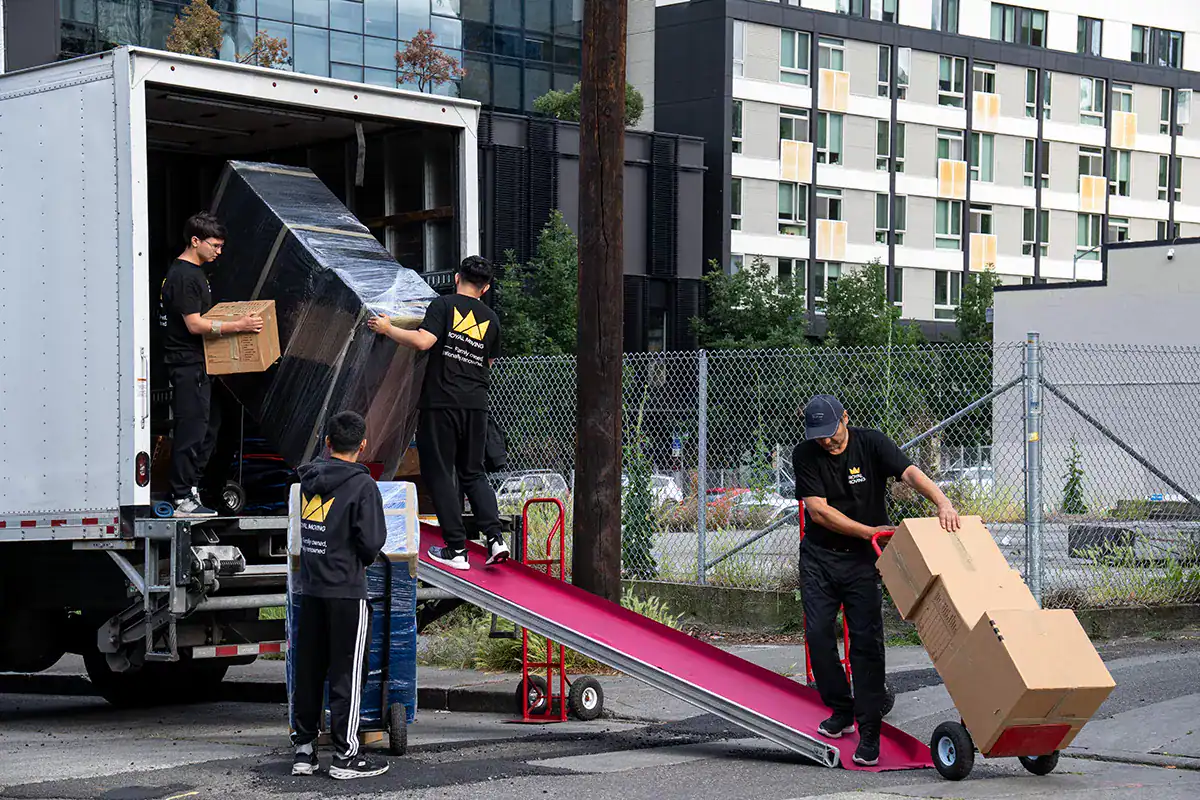
Three move types dominate. Hill neighborhoods like Education Hill and Grass Lawn bring slopes, mature trees, and driveway-by-driveway truck decisions. Valley apartments and townhomes bring shared lanes and visitor-parking math. The tower districts bring full building protocol: reserved freight elevators, dock windows, certificates of insurance, all controlled by management and all booked days ahead.
SR-520 and the downtown couplet set the timing. Campus commute waves are predictable and heavy, so cross-town and cross-lake legs run in the gaps. Marymoor concert nights close the park end of downtown to easy truck movement, and we schedule around the calendar.