


Why Your Move Costs More in 2026: How Rising Gas Prices Are Reshaping Moving Costs
 Written by Vlad IglinWritten by Vlad Iglin
Fuel is one of the largest variable costs in any move. When prices at the pump climb, the cost of relocating a home or office climbs with them. In 2026, prices have done more than climb. They have surged. If you are planning a move this year, here is what is driving the increase, how much more you can expect to pay, and how to protect your budget.
The short answer is a lot, and faster than almost any period in recent memory.
The national average for regular gasoline crossed $4.00 per gallon in spring 2026 for the first time since 2022. Year over year, the national average rose roughly 26 to 36 percent depending on the measurement date. One analysis put the national figure near 44 percent, with every single state posting double-digit increases. The jump from February to spring was driven by conflict in the Middle East and pressure on the Strait of Hormuz, a critical chokepoint for global oil supply.
For movers, the more important number is diesel. Moving trucks run on diesel, not regular gasoline, and diesel rose even harder. Nationally, the average price of a gallon of diesel climbed about 50 percent year over year, from roughly $3.62 to $5.43. In early 2026, diesel surged more than 40 percent in under two months. Some states saw far steeper increases. Diesel rose nearly 69 percent in Arizona, around 63 percent in South Carolina and Nevada, and roughly 61 percent in Texas, North Carolina, and Florida.
The takeaway is simple. When you read that “gas is up 30 percent,” the reality for the moving industry is worse, because the fuel that powers moving trucks is up closer to 50 percent.
A moving company is a fuel-intensive business. Trucks burn diesel on every local route and every long-haul trip. A typical box truck or tractor returns far lower fuel economy than a passenger car, often in the range of 6 to 10 miles per gallon, so every increase at the pump multiplies across the distance of your move.
Fuel costs also do not stay contained to the truck. They ripple through the entire chain of a relocation:
Regional differences matter as well. California and the West Coast consistently pay the most for diesel, with California prices holding above $4.95 per gallon through much of spring 2026 due to refinery turnarounds and stricter state requirements. Gulf Coast markets tend to pay less because refining capacity sits nearby. If your move starts or ends on the West Coast, expect fuel to weigh more heavily on the final price.
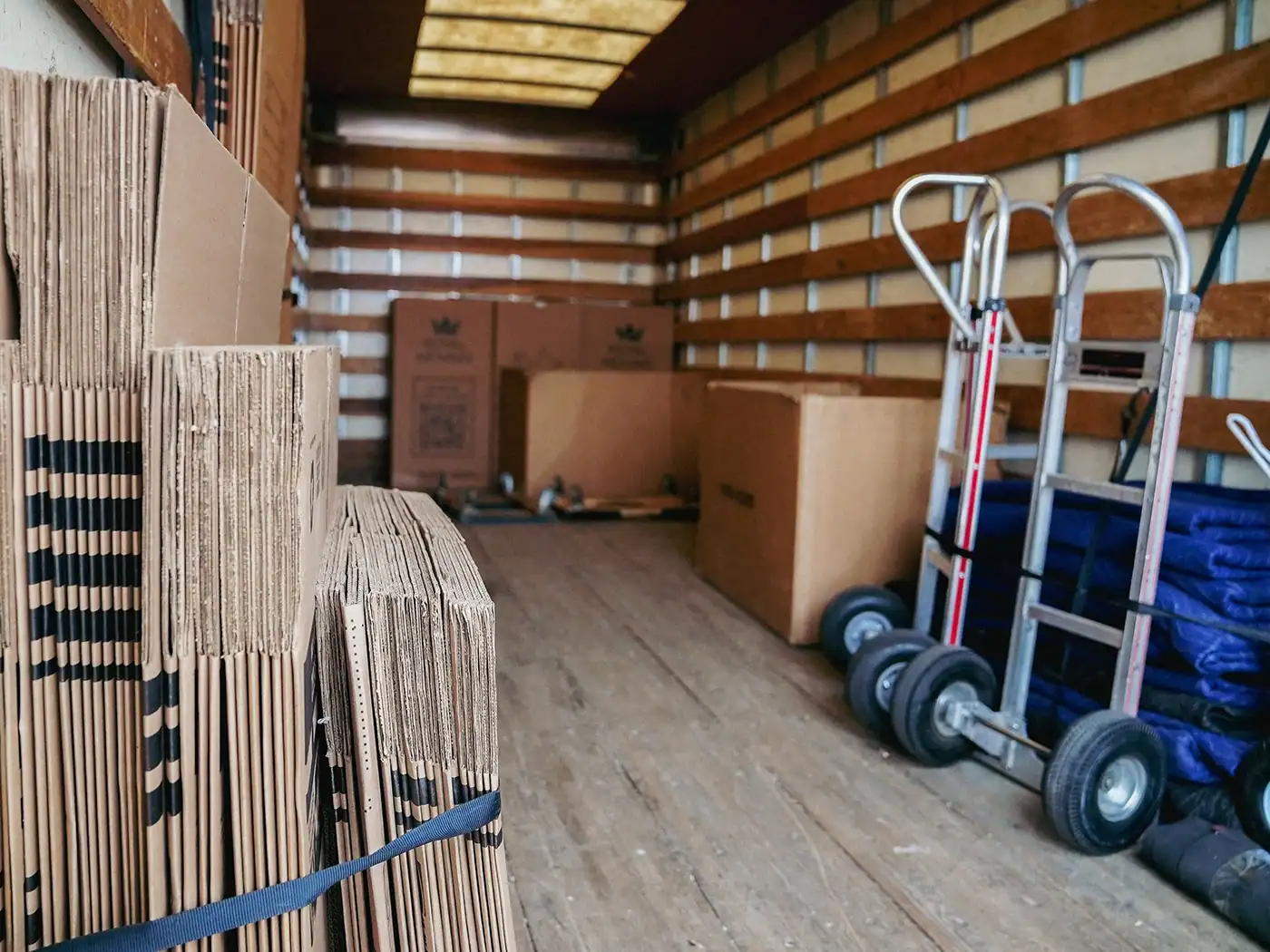
Fuel is only part of the story. The materials that protect your belongings have also become more expensive, and for overlapping reasons.
Cardboard is made from paper, and paper prices have been climbing. Energy costs remain a major driver of packaging prices, and energy in 2026 still sits roughly 45 percent above 2021 and 2022 levels. Paper production, box conversion, printing, warehousing, and transport are all energy-intensive, so higher electricity, gas, and diesel costs are felt at every stage of the packaging supply chain.
On top of energy pressure, box manufacturers raised prices directly. In 2026, major containerboard producers including International Paper, Georgia-Pacific, Packaging Corporation of America, Smurfit Westrock, Pratt Industries, and Cascades announced a second wave of price increases, with most taking effect in June. When the largest producers raise prices in unison, those increases flow downstream to every business that buys boxes, including moving companies.
Boxes are not the only materials affected, and here the link to fuel prices is even more direct. Packing tape, stretch wrap, and shrink wrap are plastics, and plastics are made from oil and natural gas. Packing tape is typically polypropylene. Stretch wrap is made from linear low-density polyethylene. Shrink wrap is usually polyolefin, which is polyethylene or polypropylene. Every one of these is a petroleum and natural gas derivative.
That means the same forces driving up gas prices drive up these supplies. The price of plastic resin is indexed to the price of crude oil. As a rule of thumb, the industry estimates that every $10 increase per barrel of crude oil raises resin cost by roughly 5 to 8 cents per pound. In 2026, crude oil surged after conflict in the Middle East shut down most traffic through the Strait of Hormuz, the chokepoint for around 20 percent of the world’s oil. US crude briefly reached about $99 per barrel, a monthly increase of more than 39 percent. The effect on plastics was immediate. Polyethylene resin prices rose roughly 45 cents per pound over the course of 2026, and polypropylene costs climbed sharply on the same feedstock pressure. When resin costs more, so does every roll of tape and wrap made from it.
There is a second cost on top of the material itself. A large share of stretch film and packing tape sold in the US is imported, with China serving as a major global supply base thanks to a mature plastics manufacturing chain. Imported materials travel by ocean freight and then by truck to reach a warehouse, and both legs of that journey run on fuel that is more expensive in 2026. Imported supplies can also carry tariff costs. So for any materials brought in from overseas, the buyer pays more for the resin, more to ship it, and potentially more in duties, all at once.
For a customer, this shows up in the cost of moving supplies. Boxes, tape, bubble wrap, stretch wrap, paper pads, and specialty containers for fragile items all cost more than they did a year ago. A full-home pack can require dozens of boxes across multiple sizes, plus rolls of tape and protective wrap, so even small per-unit increases add up across a complete move.
Moving companies handle rising fuel costs in a few different ways, and it pays to understand which model applies to your quote.
The practical effect across the industry is that moves cost more in 2026 than in 2025, and the increase is concentrated in the fuel and materials portions of your estimate.
You cannot control the price of diesel, but you can control how much it affects your move.
Gas prices are up sharply in 2026, and for the moving industry the impact is even larger than the pump price suggests, because diesel and packing materials have both risen at the same time. National diesel climbed roughly 50 percent year over year. Crude oil spiked near $99 per barrel, which pushed up the plastic resin used to make tape and wrap. Energy costs raised paper prices, and major box producers raised prices directly. Because tape, stretch wrap, and shrink wrap are made from oil, the very same price surge hitting the fuel tank also hits the supply closet. For customers, that means higher moving estimates, more fuel surcharges, and pricier supplies.
The good news is that an informed customer has real leverage. Ask how fuel is handled, lock in your price where you can, reduce what you move, and compare detailed quotes. A move in 2026 will likely cost more than it did a year ago, but understanding where the increases come from is the first step to keeping your bill under control.
Planning a move soon? Royal Moving & Storage can help you understand your options, review the details of your move, and provide a clear estimate based on your needs.