Getting to Know Northridge
How Northridge Sits
Northridge is a neighborhood of the City of Los Angeles, in the northwestern San Fernando Valley. Because it is part of the city, a move here follows city rules through the Los Angeles Department of Transportation, not a separate city hall or the county. The neighborhood covers about 9.5 square miles and holds somewhere around 68,000 residents. It sits a little higher than the valley floor, with the Santa Susana Mountains rising to the north and west.
California State University, Northridge anchors the neighborhood, drawing tens of thousands of students and giving the area a university-town character. Reseda Boulevard, Nordhoff Street, Devonshire Street, Tampa Avenue, and Roscoe Boulevard are among the main routes. The 118 Freeway runs along the north, with the 405 to the east and the 101 to the south. Northridge borders Granada Hills to the northeast and Porter Ranch and Chatsworth to the northwest. Winnetka and Reseda lie to the south, and North Hills and Lake Balboa to the east.
The housing is mostly single-family, built during the postwar suburban boom. Ranch-style homes line the tree-lined streets, with a few areas of larger lots that recall the neighborhood’s ranching days. Around the university, there are apartments, condominiums, and rentals that turn over with the school year. The population is diverse, with significant White, Latino, and Asian communities. It is a mix of families, longtime homeowners, students, and university staff.
From Zelzah to Northridge
The land was home to the Tongva and Tataviam peoples for thousands of years. The Spanish arrived in 1769, and Mission San Fernando Rey de España was founded in 1797. Through the nineteenth century, the area was ranch and farm country, part of the wide agricultural sweep of the San Fernando Valley. It grew wheat and later citrus and other crops. When the Southern Pacific built a rail station here in the early twentieth century, the settlement around it took the name Zelzah.
The name changed twice more. The community was renamed North Los Angeles in 1929, and then Northridge in 1938. The new name was meant to evoke the ridges of the hills to the north. Through the 1920s and 1930s, the area was known for its ranches and horse properties, including the estates of a few Hollywood figures. The equestrian heritage still shows in the larger lots in parts of the neighborhood.
The biggest change came after World War II. The ranches and groves gave way to tract housing, and Northridge filled in with single-family homes for the families pouring into the Valley. California State University, Northridge was founded in the 1950s and given its current name in 1972. It grew into one of the largest universities in the state and became the defining institution of the neighborhood. On January 17, 1994, a powerful earthquake centered in the area caused widespread damage across the Valley and gave the neighborhood a difficult place in the region’s history. The community rebuilt, and in the decades since, it has become one of the most earthquake-prepared and civically engaged neighborhoods in the city.
What a Northridge Move Really Involves
Northridge is part of the City of Los Angeles, so a move here works under LADOT rather than a separate city or the county. For a larger move, LADOT issues a temporary no-parking permit to keep curb space open at the address. Our team handles the filing and puts up the signs ahead of time. The permit matters most in the apartment areas around the university, where street parking is tight and turns over constantly, and on the narrower residential blocks.
The university sets the rhythm of much of the work. The apartments and rentals near CSUN turn over with the academic year, so late summer brings a rush of move-ins, and spring brings move-outs. These are often buildings with shared stairwells, limited parking, and their own move-in rules. We handle the stair carries, the parking, and the building coordination, and we book early during the busy stretches so the date is locked in before the rush.
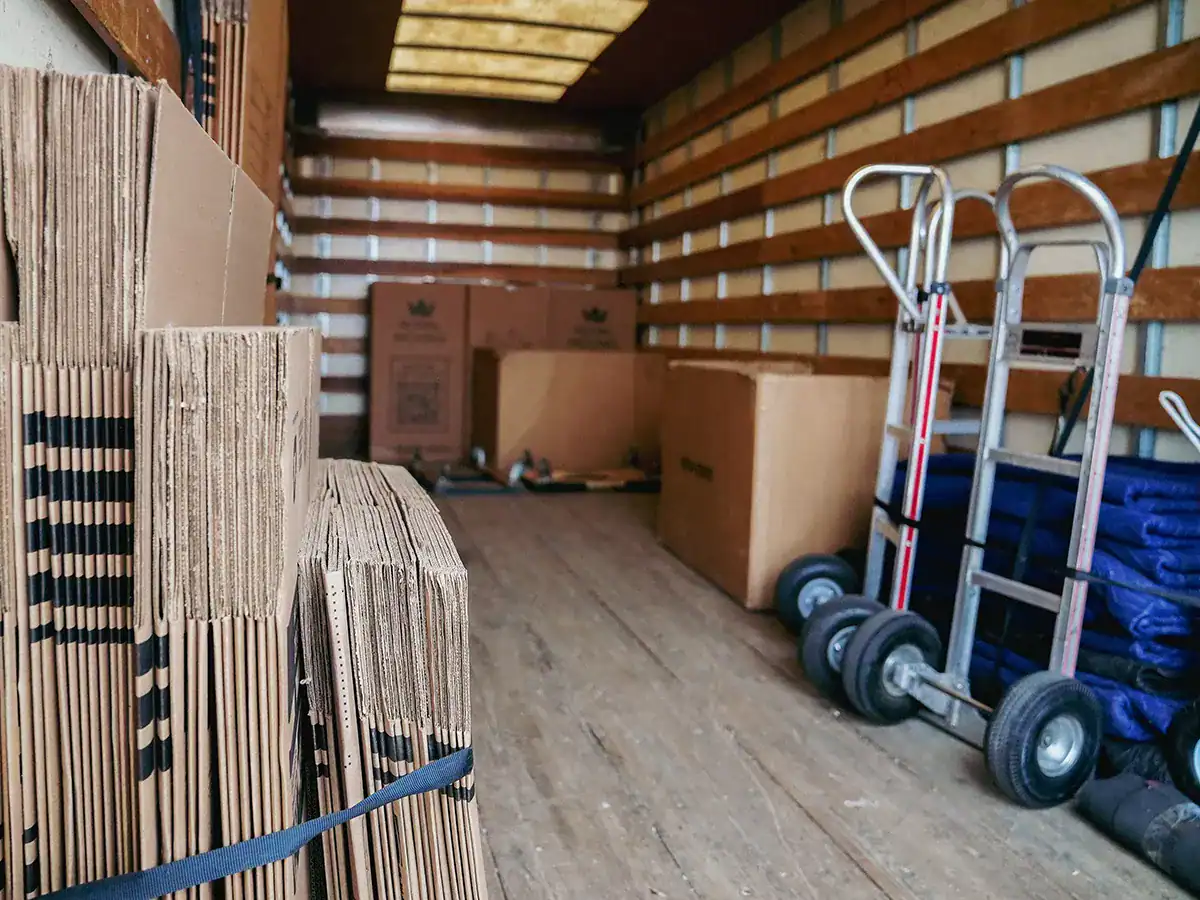
Away from campus, the work is mostly straightforward suburban moves. The postwar ranch homes have driveways and garages and are easy to work. The larger lots in the northern part of the neighborhood can mean a longer carry from the curb to the door. We size the truck and crew to the property and bring door and floor protection as a matter of course. The permit, the access, and the parking are all squared away before move day, so nothing holds up the job once the crew arrives.