Getting to Know Porter Ranch
How Porter Ranch Sits
Porter Ranch is a neighborhood of the City of Los Angeles, at the northwest edge of the San Fernando Valley. Because it is part of the city, a move here follows city rules through the Los Angeles Department of Transportation, rather than a separate city hall or the county. The neighborhood covers about 5.6 square miles and holds somewhere around 30,000 residents. It has one of the lowest population densities in the City of Los Angeles, a reflection of its large lots and planned open space.
The land climbs from the Valley floor into the foothills of the Santa Susana Mountains. The range rises to the north and separates the San Fernando Valley from the Santa Clarita Valley. Corbin Avenue, Porter Ranch Drive, Tampa Avenue, and Reseda Boulevard run north and south. Sesnon Boulevard, Rinaldi Street, and the Ronald Reagan Freeway, State Route 118, run east and west. Porter Ranch borders Granada Hills to the north and east and Chatsworth to the south and west. Northridge lies to the south, with the mountains closing off the north.
The housing is mostly large, newer single-family homes on generous lots, including hillside houses with valley and mountain views and many gated communities. Luxury apartments and townhomes sit near the commercial center. The population is affluent and family-oriented, and the schools are among the most sought-after in the Valley. The neighborhood is known for its clean air, its strong canyon winds, and its quiet, planned, suburban feel at the edge of the open foothills.
From Wheat Fields to a Master-Planned Community
The land was part of the wide territory the Tongva people knew for thousands of years, and later of the Rancho Ex-Mission San Fernando. In the late nineteenth century, a man named Benjamin Porter bought a portion of that land in the foothills above what is now Northridge. The area took his family’s name. For its first several decades it was mostly wheat fields. In its relative isolation, it later became a place of horse ranches, including some owned by movie stars.
Development came late. Porter Ranch was the last part of the San Fernando Valley inside the Los Angeles city limits to be built out. Major construction did not begin until the 1970s. The homebuilder Nathan Shapell, a Holocaust survivor who became one of California’s most prolific developers, is the name most tied to the community. He built the large-lot homes that set its character. Its open, suburban look drew Hollywood too. Parts of the 1982 film E.T. the Extra-Terrestrial were shot in the neighborhood.
The modern community was shaped by a formal plan. The Porter Ranch Specific Plan, adopted in 1990, laid out the later phases of development. It emphasized hillside preservation, planned streets, parks, and the Porter Ranch Town Center as a commercial heart. Construction continued through the following decades. Porter Ranch grew into the spacious, master-planned, foothill community it is today, still one of the newest and most planned parts of Los Angeles.
What a Porter Ranch Move Really Involves
Porter Ranch is part of the City of Los Angeles, so a move here works under LADOT rather than a separate city or the county. For larger moves, LADOT issues temporary no-parking permits that hold curb space at the address, and our office arranges and posts these in advance. On the hillside streets and inside the gated developments, there is less room to leave a truck, and access can be controlled. A parking and access plan matters as much as the permit there.
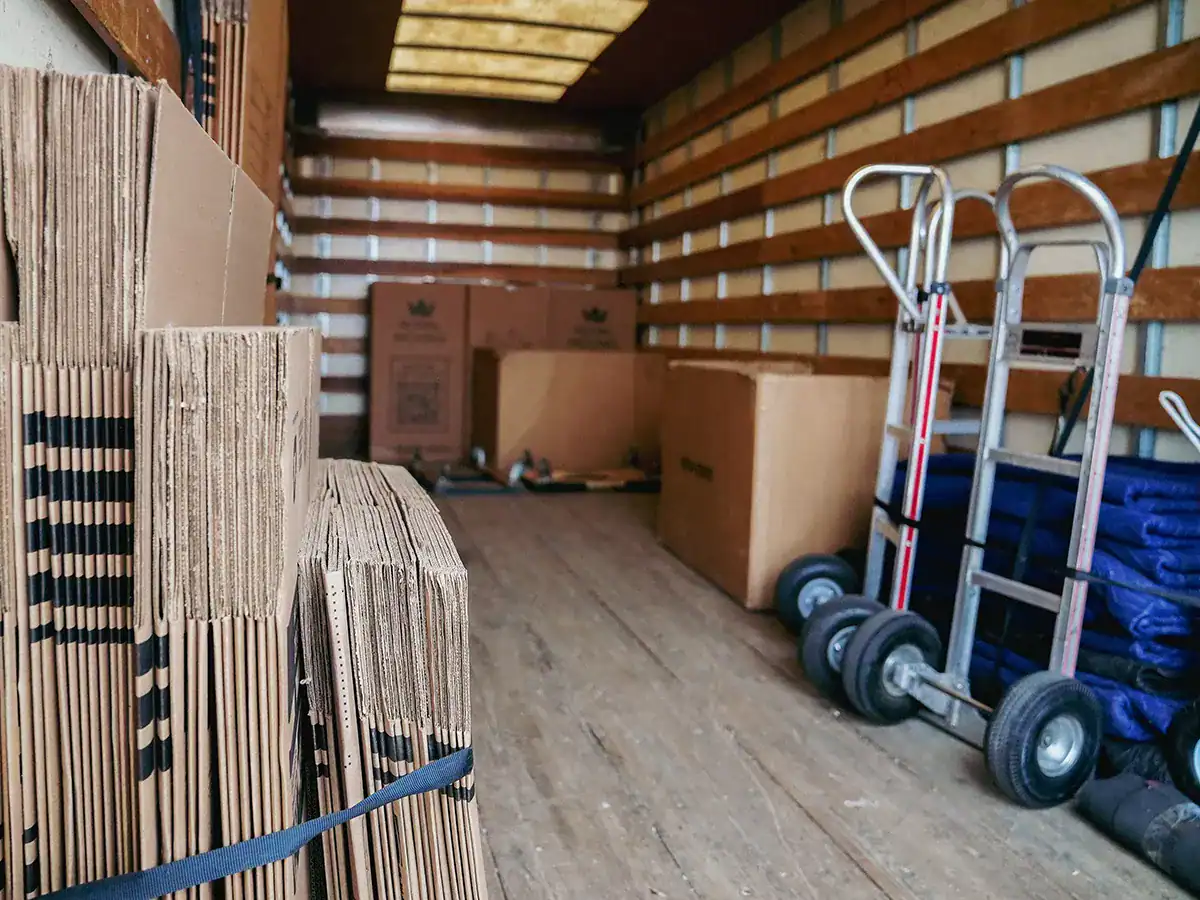
The homes are the heart of the work. Porter Ranch is a neighborhood of large houses, many of them two stories on estate-sized lots. A move here usually means a full household of furniture, several rooms and floors to clear, and the careful handling that fine and high-value pieces call for. We size the crew and the truck to a big home, bring door, railing, and floor protection as a matter of course, and plan the carry across the floors and out to the truck.
The terrain and the gates are the other factors. The streets climb and curve into the foothills, so hillside homes can have long or steep driveways and a longer carry from where a truck can park. Many developments are gated, with entry and internal routing to arrange in advance. We check the grade, the driveway, and the gate access before move day, and confirm any HOA or community certificate of insurance. Nothing slows the job once the crew arrives.