Getting to Know Agoura Hills
How Agoura Hills Is Laid Out
Agoura Hills is its own city, not part of Los Angeles. It became a city in 1982 and covers about 8 square miles in the eastern Conejo Valley, roughly 35 miles northwest of downtown LA, set between the Simi Hills and the Santa Monica Mountains. Because it runs its own government, the city sets its own rules on truck parking, oversized vehicles, and permits. It calls itself the Gateway to the Santa Monica Mountains, and Ladyface Mountain rises over the heart of town.
The city spreads across several distinct areas. Old Agoura, on the north side, keeps a rural, horse-country feel with larger lots and ranch homes. Gated hillside communities sit near Medea Valley, and tracts like Liberty Canyon, Lake Lindero, and Hillrise fill out the residential map. The 101 (Ventura) Freeway runs through the middle and splits the north and south sides of town. Most residents own their homes, and the city is known for its schools, its parks, and the open trails right at its edge.
From Picture City to a Mountain Town
The land was home to the Chumash and Tongva peoples, and later became part of the Spanish and Mexican Rancho Las Virgenes. By 1900, the area was a stagecoach stop, watered by a natural spring at the foot of Ladyface Mountain. The old Reyes Adobe from that ranch era still stands in town as a museum.
In the 1920s, the movies arrived. Paramount Pictures bought a large ranch nearby and used it to film Westerns, and the community picked up the nickname Picture City, drawing stars like Gary Cooper and Clark Gable. When residents needed a one-word name for their post office, they chose Agoura, after Pierre Agoure, a French sheep rancher who had settled in the area in the 1870s. The spelling shifted from his name to “Agoura” somewhere in the process, likely a postal mix-up, and it stuck. Growth took off after the Ventura Freeway came through in the late 1960s, and the city kept the “Hills” in its name when it incorporated in 1982.
What an Agoura Hills Move Really Involves
Because Agoura Hills runs itself, the rules that touch a move come from the city, not from Los Angeles. For larger moves, the city issues temporary no-parking permits that hold curb space at the address, and these need to be lined up and posted ahead of time. Some narrow streets also limit larger trucks, so the vehicle has to fit the road.
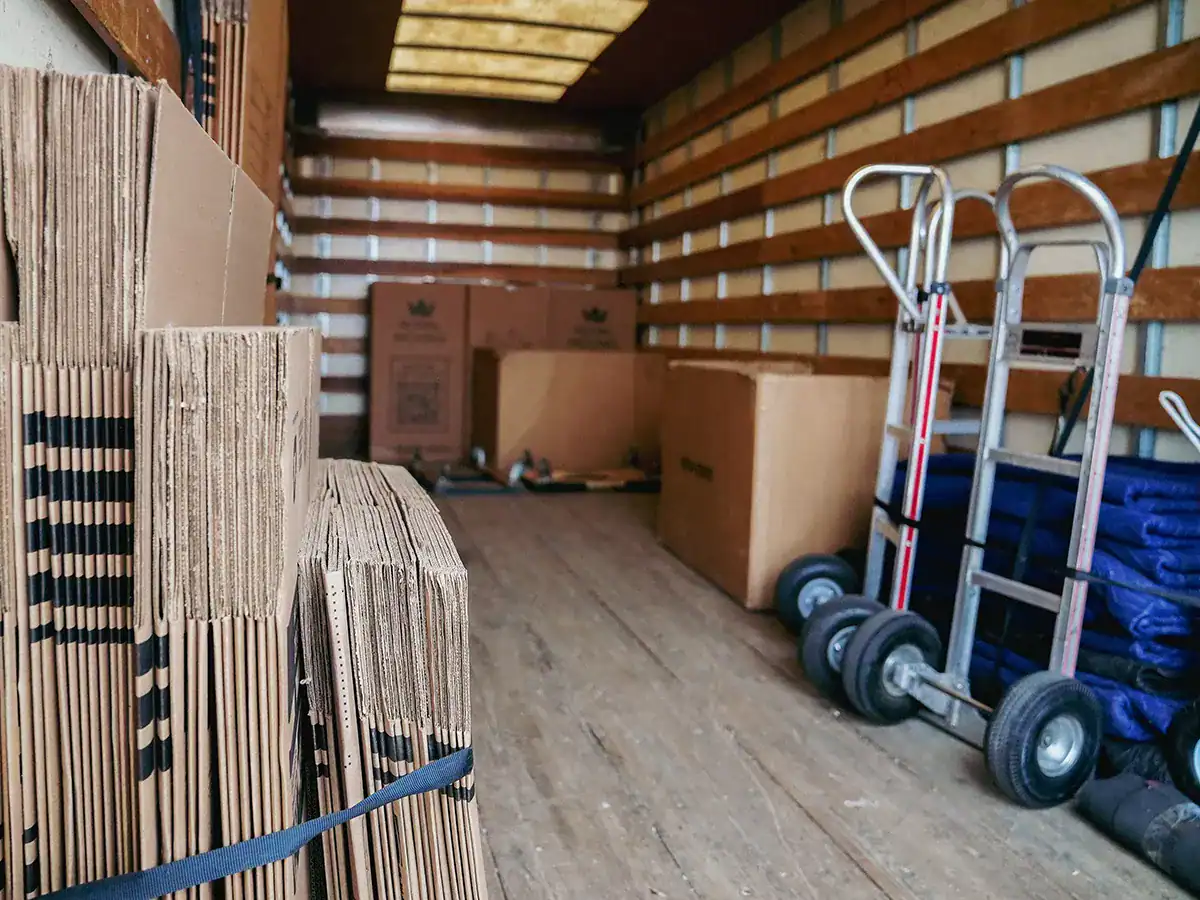
The land is the bigger factor. Many homes sit up steep, winding canyon roads with long or sloped driveways, and a 26-foot truck does not belong on every one of them. We check the grade and the approach in advance and bring a truck-sized truck to the street. Where the road is too tight, we plan a shuttle or a longer carry instead of forcing it.
Gates and HOAs add the last layer. Many Agoura Hills communities are gated and require gate codes, advance notice, or a certificate of insurance before move day. Older Old Agoura homes bring narrow doorways and tight interior stairs. We arrange the gate access, the permits, and the right equipment beforehand, so nothing holds up the job once we are on site.