Getting to Know Carson
How Carson Sits
Carson is an independent city in the South Bay and Harbor region of Los Angeles County, about 13 miles south of downtown Los Angeles and a short distance from the ports of Long Beach and Los Angeles. It covers roughly 19 square miles, which makes it one of the larger South Bay cities by area. It holds about 95,000 residents. Because it is its own city, Carson sets its own rules on truck parking, oversized vehicles, and permits. These are separate from the City of Los Angeles. The 405, 110, 91, and 710 freeways cross or border the city. Carson is bordered by Compton to the northeast, Long Beach to the east, Wilmington to the south, and the unincorporated communities of West Carson and Harbor Gateway to the west.
The city is a mix of residential, industrial, and institutional land. Postwar single-family tracts and townhome developments make up most of the housing. Apartments line the main corridors. California State University, Dominguez Hills anchors the city’s east side. The Dignity Health Sports Park sits on its campus. Industry remains central to Carson, from refineries to logistics yards. Much of it is organized into the industrial parks that the city encouraged after incorporation. Carson is among the most ethnically diverse cities in the United States, with a Filipino-American plurality alongside large Hispanic and Black communities.
From Rancho San Pedro to Future Unlimited
The land was home to the Tongva people for thousands of years before it became part of Rancho San Pedro, the Spanish land grant deeded to Juan Jose Dominguez in 1784. The Dominguez family held the rancho for generations. The area saw the Battle of Dominguez Rancho during the Mexican-American War in 1846. The city takes its name from George Henry Carson, who married into the Dominguez family in 1857 and managed the rancho.
Oil changed the area. The first drilling at Dominguez Hill came in 1921. It turned the former ranchland into a center of refineries and heavy industry. Through the mid-twentieth century, the unincorporated area was filled with tract housing and industry. In some places, it also drew landfills and junkyards that residents had little say over. After nearly a decade of effort by community leaders, Carson incorporated as a city in 1968, the youngest in the South Bay. It adopted the motto “Future Unlimited.” Two developments added land and momentum: the opening of California State University, Dominguez Hills in the 1960s and the draining of the Dominguez Channel. The city has since worked to clean up its industrial legacy while keeping the industry that remains organized within its business parks.
What a Carson Move Really Involves
Carson runs its own affairs, so the rules that shape a move come from the city, not from Los Angeles. For larger moves, the city issues temporary no-parking permits that hold curb space at the address, arranged and posted in advance. On Carson’s wider residential streets, there is often more room at the curb than in older neighborhoods, but reserving the space still keeps a large truck close to the door.
The layout of the city is the local factor that sets a Carson move apart. The neighborhoods are spread out, with wide streets and driveways that generally make truck access and loading straightforward. As a result, the work usually moves at a good pace. Townhome and HOA developments add their own steps, such as shared driveways, reserved guest parking, and certificate-of-insurance rules through the association. We handle those before the day. Apartments near the university bring the usual stairs and shared entries.
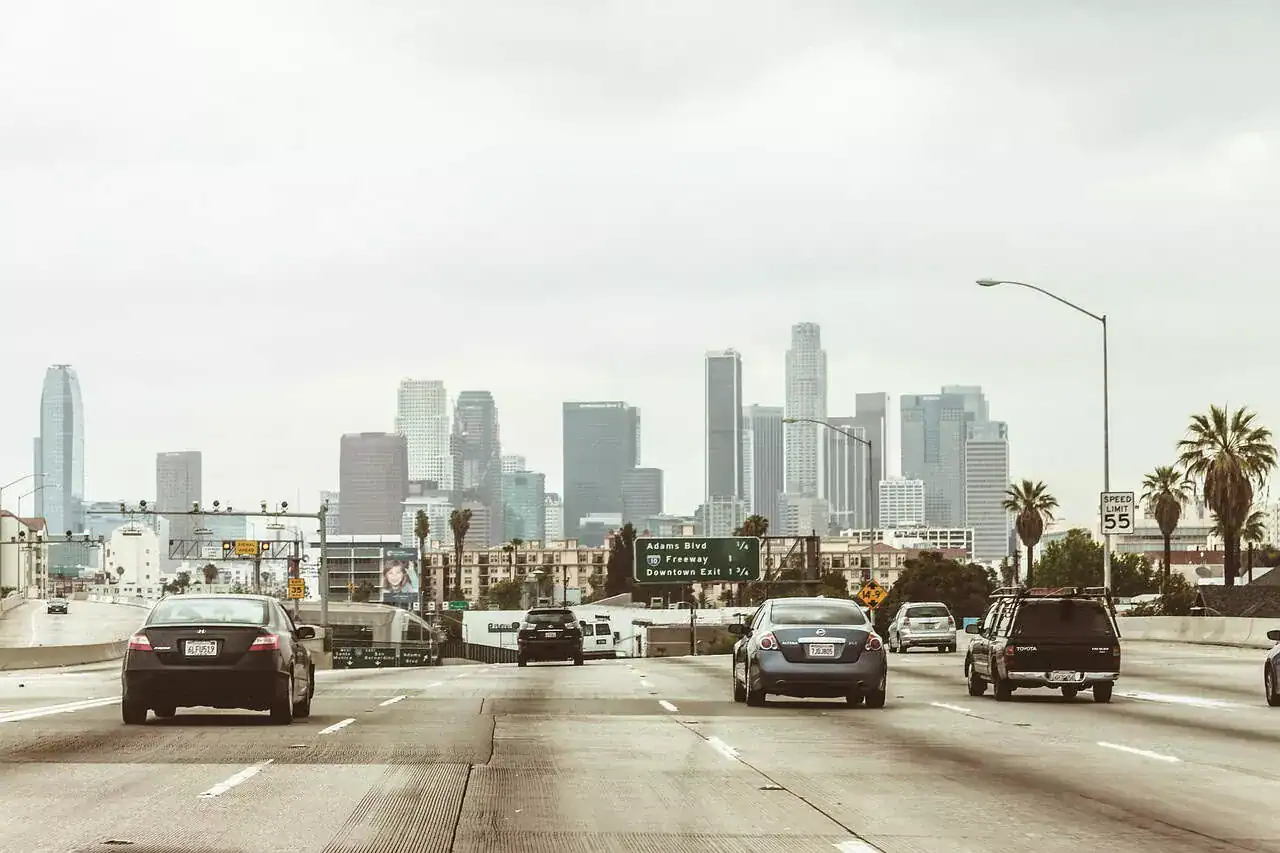
The main roads through Carson carry heavy truck traffic to and from the ports and the industrial parks. The freeways around the city are among the busiest in the region, so we plan the route and the timing to work around the congestion. We arrange the permits, the building access, and the right-size truck before the day, so nothing holds up the move once we arrive.