Getting to Know Hawthorne
How Hawthorne Sits
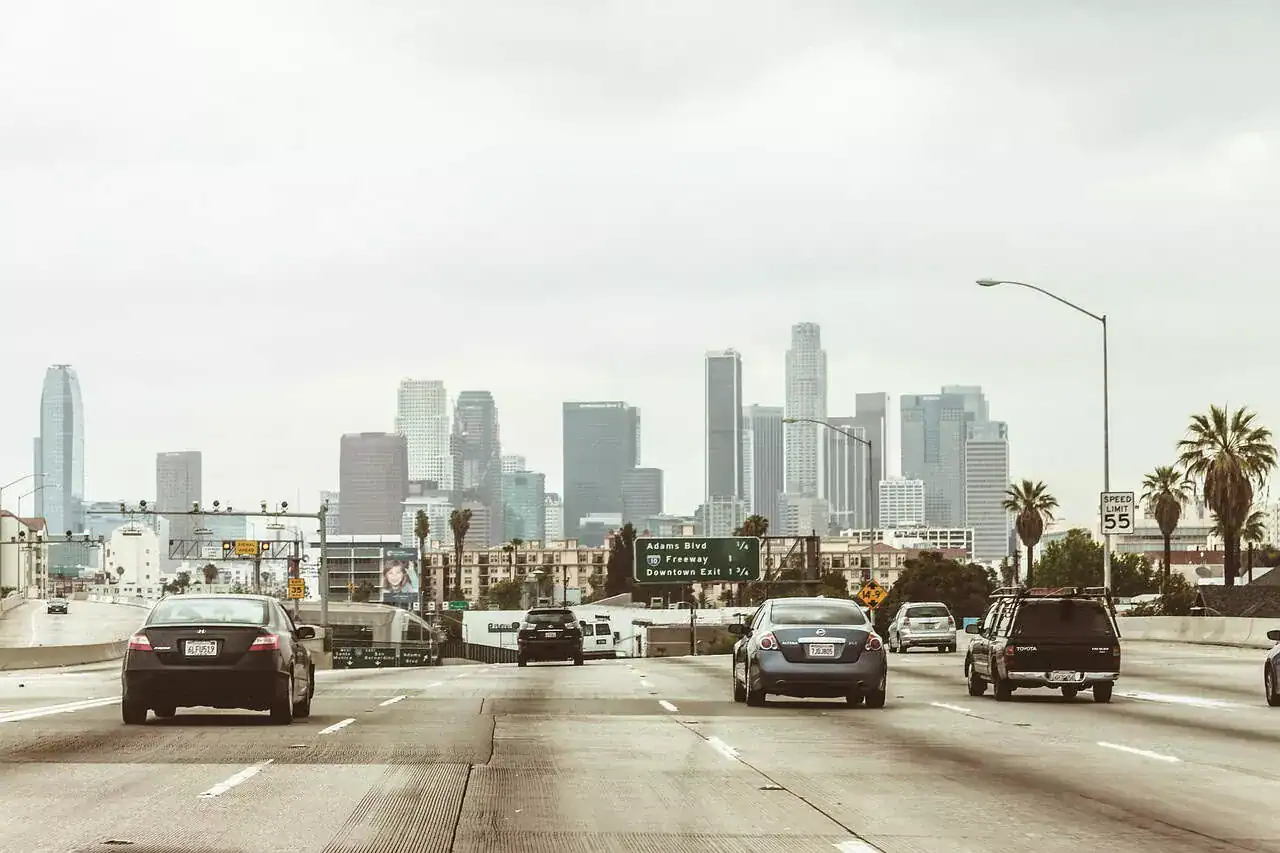
Hawthorne is an independent city in the South Bay region of Los Angeles County, immediately east of LAX. It covers about six square miles and holds roughly 88,000 residents, which gives it a density of around 14,500 people per square mile, among the highest in the county. Because it is its own city, Hawthorne sets its own rules on truck parking, oversized vehicles, and permits, separate from the City of Los Angeles. Three freeways either pass through or wrap around the city. The 405 runs to the west, the 105 along the southern edge, and the 110 a short distance to the east. Hawthorne Boulevard is the main north-south spine. El Segundo Boulevard, Rosecrans Avenue, and Imperial Highway cross it. The city borders El Segundo and the LAX area to the west, with Lawndale to the south. Gardena lies to the east, and Lennox and the City of Los Angeles to the north.
Hawthorne is overwhelmingly residential, with a dense mix of older single-family homes, postwar bungalows, walk-up apartments, and newer condos and townhomes. It is also one of the more diverse cities in the South Bay. Large Latino, Black, and Asian populations live here, and a substantial share of residents were born abroad. The city’s identity is shaped as much by what is built here as by where it sits: it is widely known as the hometown of The Beach Boys, and it is the headquarters of SpaceX.
From Rancho Sausal Redondo to the Aerospace Belt
The land was home to the Tongva people and later sat within Rancho Sausal Redondo, a large Mexican-era grant of more than 22,000 acres held by the Ávila family. The townsite was laid out around 1906 and given the name Hawthorne by Mrs. Laurine H. Woolwine in honor of the American novelist Nathaniel Hawthorne. The city was incorporated in 1922 as a small farming and manufacturing community on the South Bay flats.
The shift that defined Hawthorne came in 1939, when Jack Northrop built the headquarters of his aircraft company on the city’s eastern edge. Northrop expanded dramatically during the Second World War, building P-61 Black Widow fighters and many other aircraft. Hawthorne grew into one of the centers of Southern California’s aerospace industry. The aerospace identity outlasted Northrop’s later move to El Segundo. In the decades since, SpaceX has built its headquarters and main factory in the city. The Tesla Design Center has set up at Hawthorne Municipal Airport, and a range of other engineering and technology companies have followed. The Beach Boys grew up here in the postwar years, and the city’s residential streets still hold the bungalows of that era.
What a Hawthorne Move Really Involves
Hawthorne is an independent city, so the rules that shape a move come from the city hall rather than the City of Los Angeles. For larger moves, the city grants temporary no-parking permits to reserve curb space at the address, set up and posted in advance. On Hawthorne’s dense, full blocks, where lots are modest and curb space is limited, reserving the space keeps a truck close to the door.
The density and the airport corridor are the local factors that set the work apart. Most homes here sit on modest lots along tight streets, so we match the truck to the block and plan where it can park and load. Many of the older houses and bungalows have narrow doorways and small driveways. The walk-up apartment buildings often have no elevator, which means stair carries through tight stairwells. We carry the wrapping and protection to handle either kind cleanly.
The freeways and main boulevards run heavily at peak hours. LAX traffic sits close by, and commuter waves move around the SpaceX and 105-corridor offices. So we plan the route and the timing to work around the congestion, and pull early or late slots where it helps. We handle the permit, the access, and the truck size before the day, so nothing slows the job once the crew arrives.