Getting to Know San Dimas
How San Dimas Sits
San Dimas is a city in the far eastern San Gabriel Valley, at the foot of the San Gabriel Mountains, about twenty-eight miles east of downtown Los Angeles. It covers roughly fifteen square miles and has a population of about 34,900 people at the 2020 census. The city runs from Interstate 10 in the south to the foothills in the north, with State Route 57 and Interstate 210 crossing through. It takes its name from San Dimas Canyon in the mountains above the city.
San Dimas is known for keeping an early Western look. The downtown core along Bonita Avenue was developed in the 1970s on a Western Village concept, with wooden sidewalks and old-fashioned storefront facades, and the city holds its Western Days and Rodeo each fall at Horsethief Canyon Park. The small-town, equestrian character runs through the place. Horse properties and riding are part of life here, and the city long hosted the Miss Rodeo California pageant.
The neighborhoods range from flat family streets to foothill hillsides. Via Verde, with its country club and view homes, sits on the hills in the south, while San Dimas Canyon holds mid-century and newer homes near the mountains in the north. Older ranch homes line streets like San Dimas Avenue, and newer tracts fill in between. Frank G. Bonelli Regional Park, with the 250-acre Puddingstone Reservoir and the Raging Waters water park, spreads across the southwest corner. In September 2025, the Metro A Line light rail reached the city, with a new San Dimas station near Bonita Avenue.
From Mud Springs to the Western Village
The land was home to the Tongva people. In 1837, the Mexican governor granted Rancho San Jose to Ygnacio Palomares and Ricardo Vejar, who ran cattle and sheep across the area. A marshy spot fed by local springs gave the place its early name, Mud Springs, later softened to La Cienega Mud Springs.
The railroad changed everything. When the Santa Fe main line reached the area in 1887, the San Jose Ranch Company laid out streets and lots, a land agent opened the first store at Bonita and Depot, and the town took the name San Dimas from the canyon above. It grew into citrus country, shipping oranges around the world and earning the title Queen of the citrus belt.
The citrus groves faded by the mid-twentieth century as housing tracts spread and disease hit the trees. When neighboring cities began annexing parts of the area in the late 1950s, residents voted to incorporate, and San Dimas became a city on August 4, 1960. In the early 1970s, the city built its Western Village downtown, setting the look it keeps today, while the foothills and canyons filled in with the neighborhoods of the present city.
What a San Dimas Move Really Involves
San Dimas spreads from flat family streets to foothill hillsides, so most moves here turn on the home and its setting rather than distance. The first thing we settle is where the truck can sit and how the items reach it. In the foothill tracts, that means sloped, winding driveways and longer carries. On horse properties it means a long path past corrals or a barn. On the flat streets it means a straightforward carry from the curb. We confirm the access before move day.
The home is the next factor. A foothill view home may sit above or below the street, with a sloped drive and a longer path to the door. A horse property carries outbuildings and a large lot to cross. A ranch home or a newer tract house sits on a regular lot with an easy approach. We check the grade, the driveway, the stairs, if any, and the carry distance ahead of time, and bring the protection and the crew size to match.
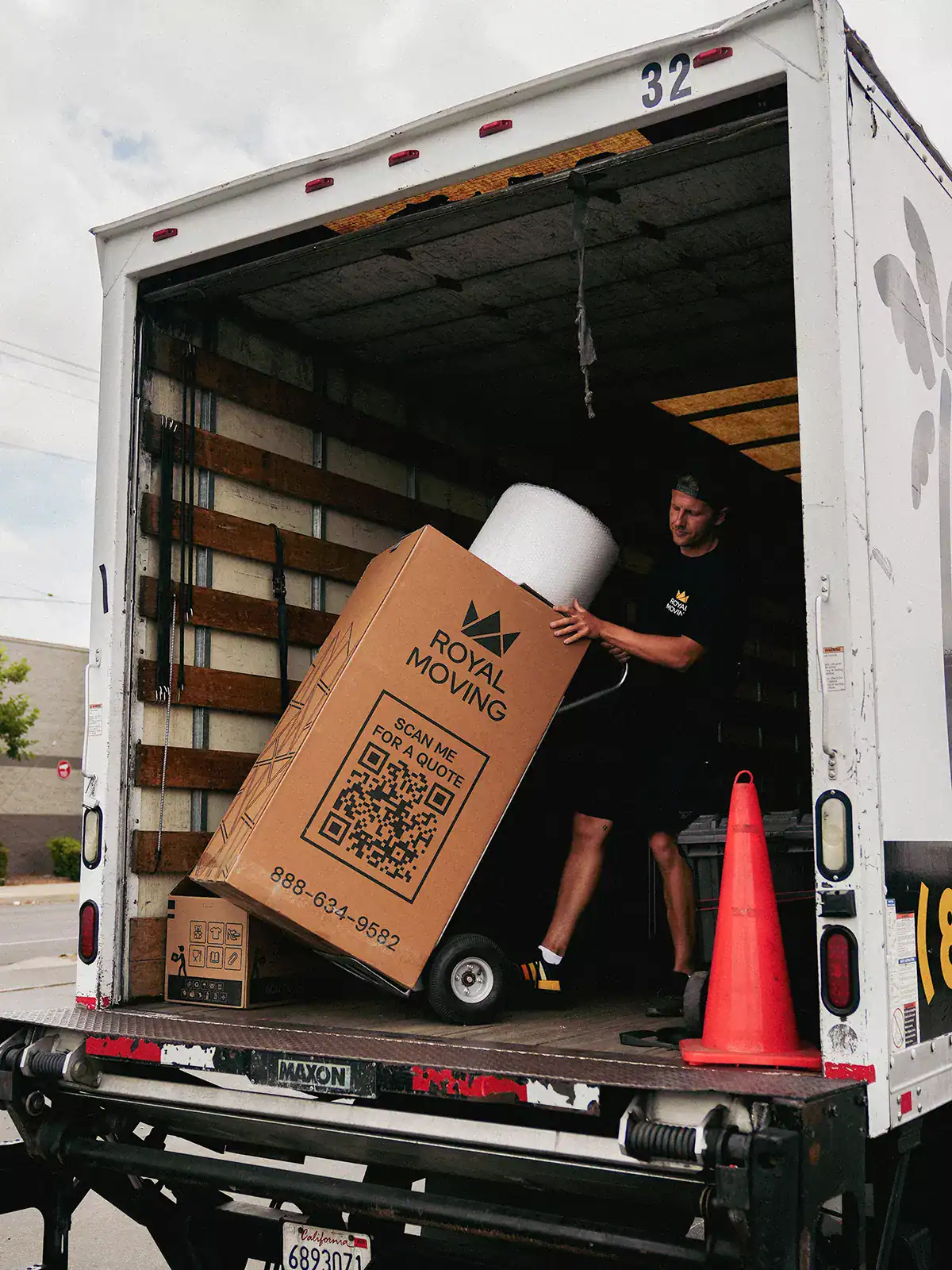
The third factor is what is being moved. A hillside house, a horse property, a downtown shop, and a family ranch home each call for a different plan. Foothill and equestrian homes often hold larger pieces and longer carries, so we plan the crew and the route to match. We bring door, railing, and floor protection as standard and plan the handling for fragile and valuable pieces. With the access, the home, and the handling settled before move day, the crew keeps moving once it arrives.