Getting to Know Commerce
How Commerce Sits
Commerce is an independent city in southeast Los Angeles County, about 7 miles southeast of downtown Los Angeles. It is compact, roughly 6.5 square miles, and unusual in its balance. Only about 12,000 people live here, but close to 48,000 work in the city each day. Because it is its own city, Commerce sets its own rules for truck parking, oversized vehicles, and permits, separate from those of the City of Los Angeles. The Santa Ana and Long Beach freeways cross it, and major rail yards run through it. Commerce is bordered by Vernon to the west, Los Angeles and East Los Angeles to the north and northwest, Montebello to the east, Downey and Bell Gardens to the south, and Maywood to the southwest, with the Los Angeles River and the Rio Hondo tracing parts of its edges.
The city is mostly given over to industry, with warehouses, manufacturing, and goods-distribution operations filling much of its land, alongside commercial landmarks such as the Citadel Outlets and the Commerce Casino. The residential neighborhoods are smaller and concentrated in pockets, made up of single-family homes and small apartment buildings, with a predominantly Latino community and larger households than the county average. The result is a city that swells with workers by day and settles into close-knit neighborhoods at night.
From Rancho to The Model City
The land was home to the Tongva people, and in the nineteenth century, it formed part of Antonio Maria Lugo’s Rancho San Antonio. Its turn toward industry began in 1887, when the Atchison, Topeka, and Santa Fe Railway built a main line through the area. Rail access then drew factories and warehouses steadily over the decades that followed.
By the mid-twentieth century, the industrial belt was thriving. In 1960, the community incorporated as the City of Commerce, largely to keep neighbors such as Vernon and Los Angeles from annexing its valuable industrial land and the tax revenue it produced. Maurice Quigley was elected the first mayor. Through the deindustrialization of the 1970s and 1980s that hit many nearby cities hard, Commerce held on to much of its manufacturing and distribution base and converted other sites to commercial use. The clearest example is the Citadel Outlets, built on the site of a former tire factory. The city earned its nickname, the Model City, from that blend of industry, commerce, and stability, and it remains a regional economic engine today.
What a Commerce Move Really Involves
Commerce runs its own affairs, so the rules that shape a move come from the city, not from Los Angeles. For larger moves, the city issues temporary no-parking permits that hold curb or dock space at the address, arranged and posted in advance. In a city this industrial, that space matters as much for an office or warehouse move as it does for a home.
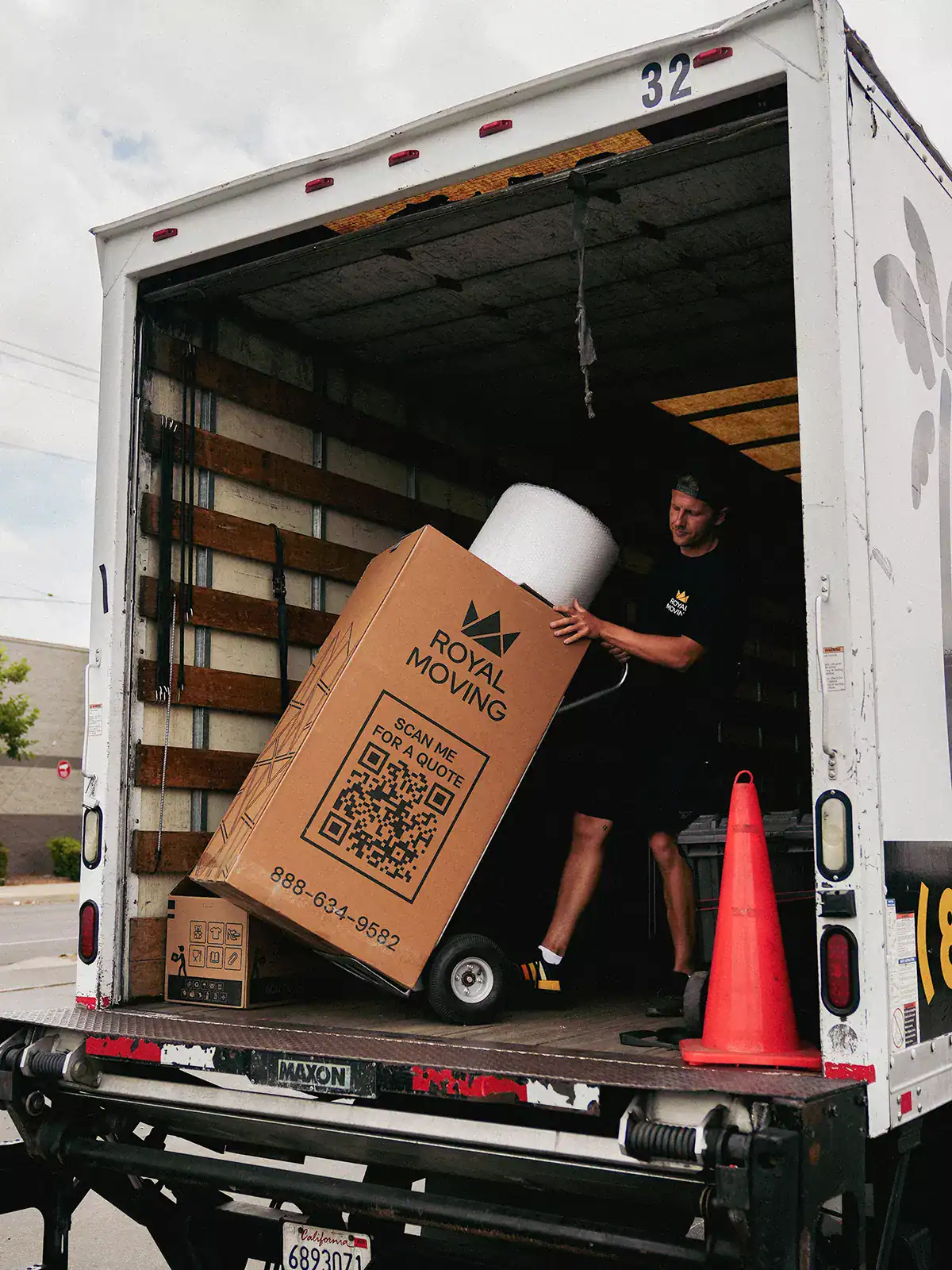
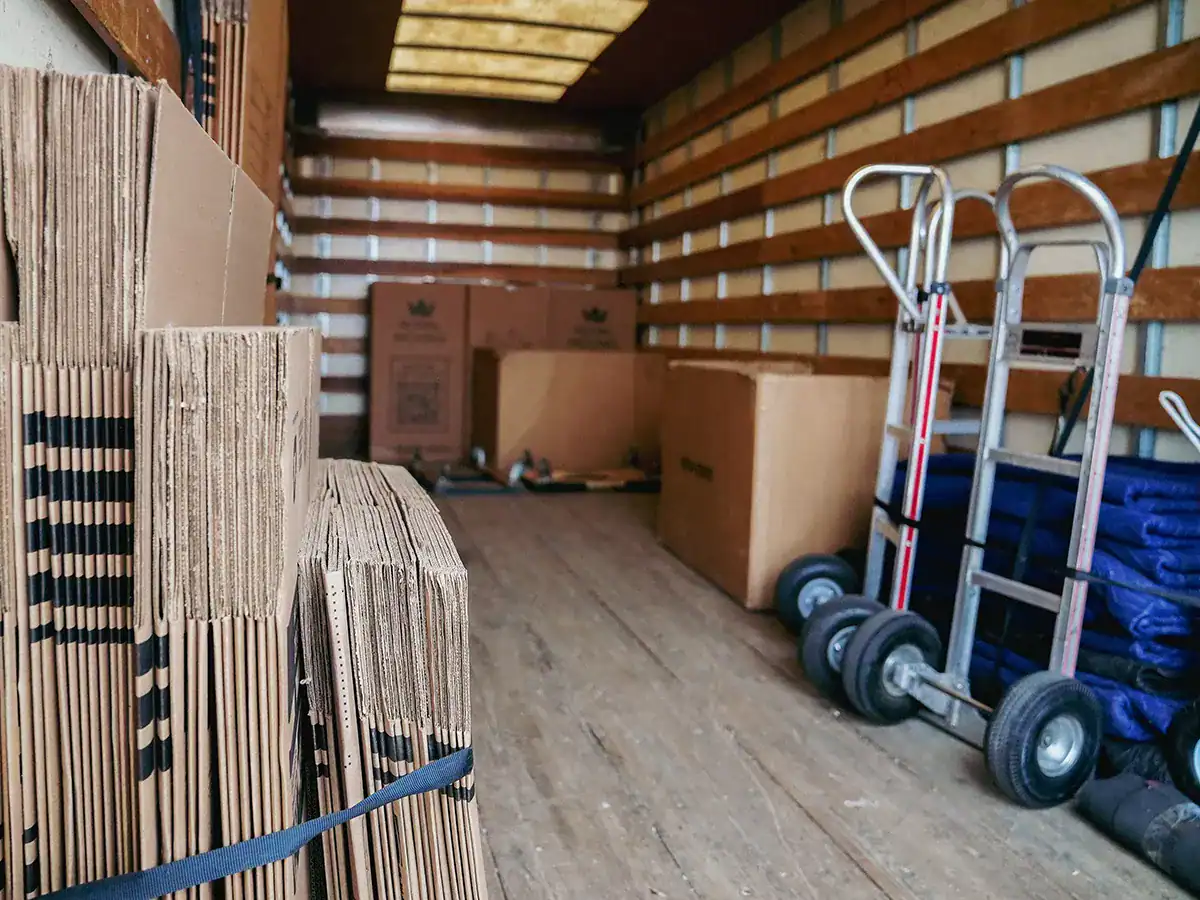
The two sides of Commerce call for two different plans. A residential move runs through narrow neighborhood blocks with limited parking, often near a busy truck route or a rail crossing. So we size the truck to the street and time the work around the freight traffic. A commercial move runs on dock access, freight elevators where they exist, and a schedule built to keep the business operating. So we coordinate with building or warehouse management and plan the move around your hours. Larger households and full offices both hold more than they appear to, so we size the crew and truck to the real volume.
The Santa Ana and Long Beach freeways and the constant truck movement through the city can make timing tight, so we plan the route and the hours to work around the congestion. We arrange the permits, the access, and the right-sized truck before the day, so nothing holds up the move once we arrive.