Getting to Know San Gabriel
How San Gabriel Sits
San Gabriel is a city in the west San Gabriel Valley, about nine miles east of downtown Los Angeles. It covers roughly four square miles and has a population of about 39,500 people at the 2020 census. By population, that ranks it among the most tightly settled cities in the west valley. It sits in a cluster with Alhambra, Rosemead, Temple City, and Monterey Park, all known for large Asian American communities, and Pasadena lies just to the north. About six in ten residents are of Asian descent, with a large Chinese and Taiwanese population.
The city is built around two centers. The historic Mission District in the south holds Mission San Gabriel Arcángel, City Hall, and the 1927 San Gabriel Mission Playhouse, an opulent theater built for John McGroarty’s Mission Play. A few blocks north, Valley Boulevard and Las Tunas Drive form one of the most important Chinese and Taiwanese commercial corridors in the country, anchored by the multi-level San Gabriel Square. The streets in between hold the homes, from older houses near the Mission to postwar tracts, condos, and apartments.
San Gabriel is known as the birthplace of the Los Angeles region. The mission was the spiritual and economic center of the early valley, and it was the starting point for the 1781 walk of Los Pobladores, the settlers who founded the pueblo of Los Angeles nine miles away. The result is a city that carries deep history and a busy, modern, family-centered present side by side.
From the Pride of the Missions to the 626
The land was home to the Tongva, or Gabrielino, people. In 1771, Franciscan fathers under Junípero Serra founded Mission San Gabriel Arcángel, the fourth of the twenty-one California missions, first near the Whittier Narrows and then moved to its present site after a flood. The mission became the wealthiest in Alta California, known as the Pride of the Missions, with farms, vineyards, and herds worked by the Tongva.
After Mexico secularized the mission in the 1830s, its vast lands passed to ranchers and farmers. The community that grew around the mission became one of the first townships in Los Angeles County. The land boom of the 1880s laid out the modern street grid, and San Gabriel incorporated as a city on April 24, 1913, with about 1,500 residents.
For its first decades, San Gabriel grew slowly as a citrus and residential town in the shadow of the mission. After the Second World War, it filled in with tract homes. From the 1980s on, a wave of immigration from China, Taiwan, and elsewhere in East Asia transformed it, building the restaurants, markets, and plazas along Valley Boulevard that draw diners from across Southern California today. The mission town became one of the great dining destinations of the region.
What a San Gabriel Move Really Involves
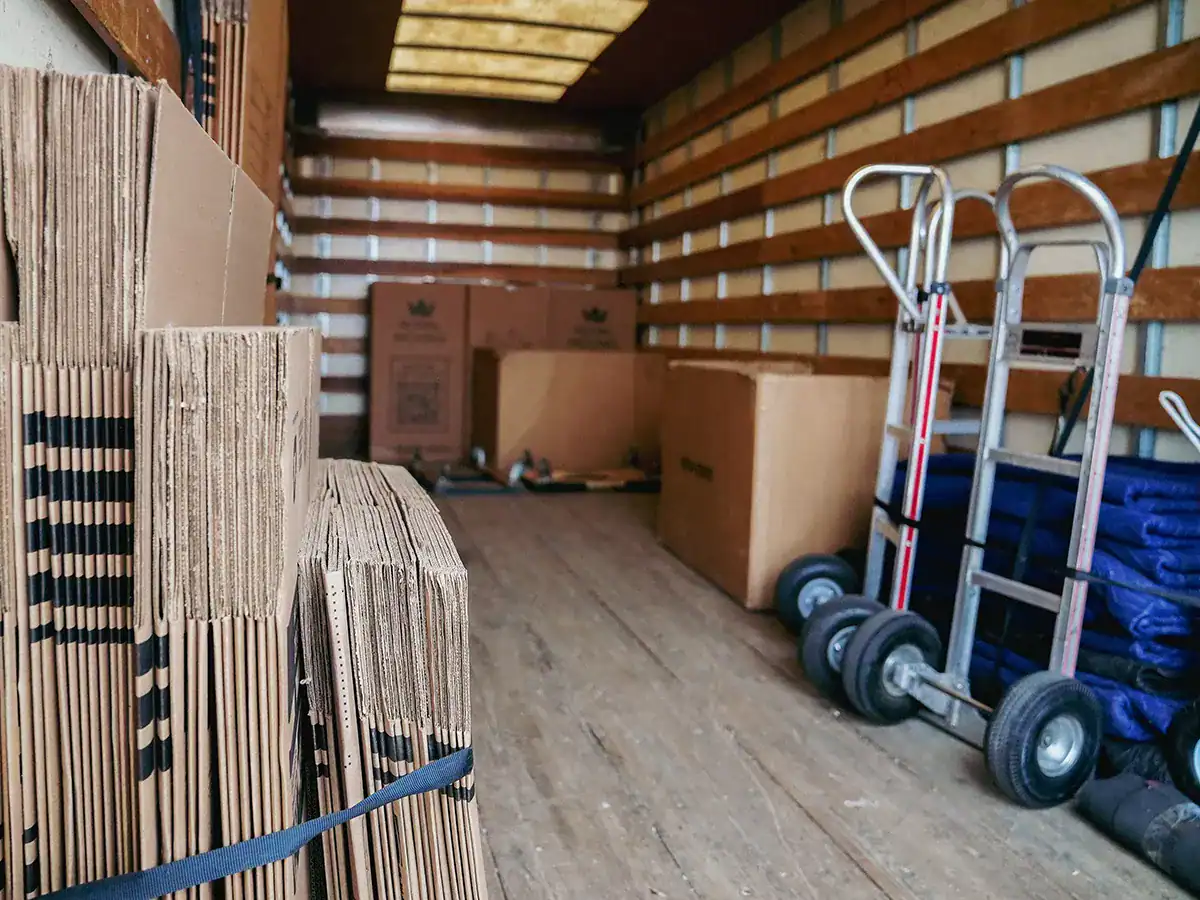
San Gabriel is dense and historic, so most moves here turn on access and tight streets rather than distance. We start by settling where the truck parks and how each item gets to it. Near the Mission District, that means narrow streets, small lots, and older homes with tight driveways. Near the corridors, it means apartments and condos with shared entrances and limited parking. In the plazas it means loading zones that fill during business hours. We lock down the parking and the access ahead of time.
Next comes the home itself. An older home near the Mission may have a narrow driveway, a tight porch, and mature landscaping to protect. A condo or apartment has a shared entrance and a stairwell, with an elevator to reserve if there is one. A postwar tract home sits on a small lot with a short approach. We confirm the floor, the stairs or elevator, and the carry length up front, then bring protection and crew to suit.
The third factor is the contents. An older Mission District home, a condo near Valley Boulevard, a restaurant in San Gabriel Square, and a family tract home each call for a different plan. A San Gabriel home often holds a full multigenerational household, so the load runs heavier than the floor plan hints. Door, railing, and floor protection come standard, and we set the handling for fragile and valuable pieces beforehand. With the parking, the home, and the handling settled before move day, the crew keeps moving once it arrives.