Getting to Know Bel Air
How Bel Air Sits
Bel Air is a neighborhood of the City of Los Angeles, not a separate city, so its moving truck permits and parking rules run through the city’s transportation department rather than a local authority of its own. It sits on the Westside, in the foothills of the Santa Monica Mountains, about 12 miles west of downtown. Two landmark gates open off Sunset Boulevard, the East Gate at Beverly Glen and the West Gate at Bellagio Way, across from UCLA, whose north side borders Bel Air. Brentwood lies to the west and southwest, Westwood to the south, Beverly Hills to the east, and Sherman Oaks over the hills to the north.
The neighborhood splits into three parts. East Gate, or Old Bel Air, holds the historic estates of the original 1923 tract. West Gate has larger estate lots and hillside views. Upper Bel Air climbs higher into the mountains. Across all three, the pattern is the same: no downtown, no sidewalks, and no through traffic, just winding roads, heavy landscaping, and large homes set well back behind walls and gates. At the center sit two of its landmarks, the Bel-Air Country Club and the Hotel Bel-Air. That seclusion is the point of the place, and it is exactly what a move has to be planned around.
From Rancho to the Platinum Triangle
The land was part of a Mexican land grant, Rancho San Jose de Buenos Ayres, given to Maximo Alanis in 1843. The name means Saint Joseph of Good Air. In 1922, the oil tycoon Alphonzo Bell, who had struck oil on his farmland, bought a large ranch here and began subdividing it into grand residential lots, with the master plan led by landscape architect Mark Daniels. His wife chose Italian names for many of the streets, among them Bellagio, Nimes, St. Pierre, Cuesta, and Capello.
Bell meant Bel Air to be exclusive from the start, and it has stayed that way. He built the Bel-Air Country Club, and the Hotel Bel-Air opened in 1946 as a luxury hideaway; it remains today. Together with Beverly Hills and Holmby Hills, Bel Air became known as the Platinum Triangle, among the most expensive residential markets in the country. One hard chapter stands out: in November 1961, the Bel Air Fire swept the hills and destroyed 484 homes. The neighborhood rebuilt, and the winding, gated, estate-lined community Bell envisioned is still here a century on.
What a Bel Air Move Really Involves
Because Bel Air is part of the City of Los Angeles, the truck parking and permits go through the city’s transportation department, which issues the temporary no-parking permits that hold space at an address. We arrange those ahead of time. But in Bel Air, the permit is rarely the hard part. The access is.
The roads come first. Many of Bel Air’s streets are narrow, steep, and winding, with switchbacks and blind curves that a full-size moving van cannot always manage. We match the truck to the road, sometimes using a smaller vehicle to shuttle from a larger one staged below, and we plan the approach before the day. Gates come next. Most estates sit behind a gate or a guarded entrance, so we arrange clearance with the homeowner, the estate manager, or security in advance, and we confirm any certificate of insurance the property requires. Then come the driveways, often long and private, which decide where a truck can actually park and how far the carry runs.
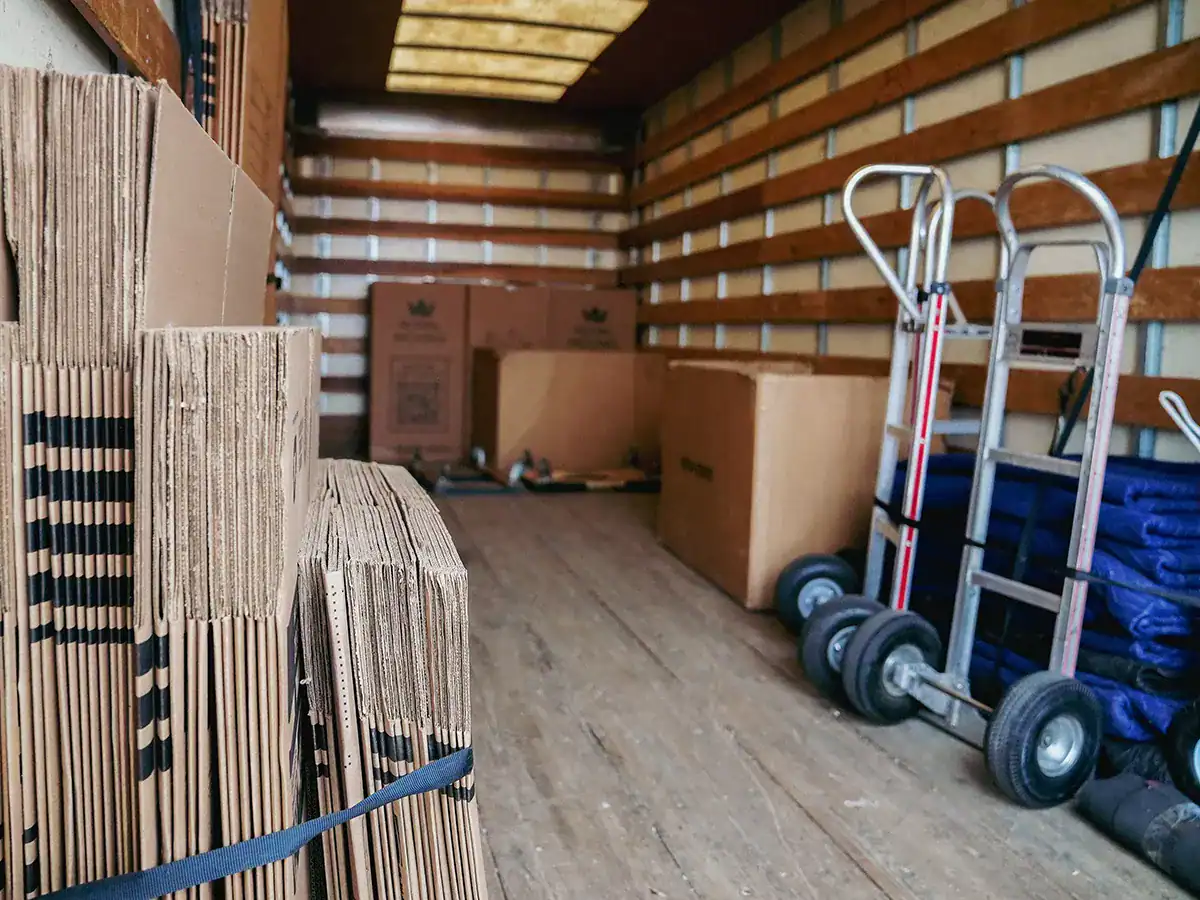
Inside, the work is white-glove by default. Bel Air homes hold fine art, antiques, pianos, and designer furnishings, so padding, wrapping, and careful handling are standard, with custom crating for the pieces that need it. We plan the crew, the truck, the route, and the protection around the specific estate, so the move is calm, careful, and discreet from the gate to the last room.