Cedar Park in Context
The Numbers Behind Cedar Park
Cedar Park is a city of roughly 80,000 residents in Williamson County, about sixteen miles northwest of downtown Austin. US 183 and the 183A tollway run through it north to south, the H-E-B Center arena anchors its entertainment district, and Brushy Creek forms part of its southern edge. The city covers about twenty-one square miles of rolling terrain at the eastern foot of the Hill Country.
Growth has been the defining fact of modern Cedar Park. The population has multiplied many times over since the 1990s, filling the land between the toll road and the hills with neighborhoods, schools, and retail.
Cedar Park’s Story
Cedar Park grew from a railroad stop on the Austin and Northwestern line in the 1880s, shipping cedar posts and lime from local kilns. Known first as Bruegerhoff and later as Cedar Park, it remained a small quarrying and ranching community for most of the next century.
The transformation came late. Suburban growth reached the area in the 1980s and 1990s, the city incorporated and expanded rapidly, and the opening of the H-E-B Center in 2009 gave Cedar Park a professional sports identity. The 183A tollway accelerated commuter access, and the city became one of the fastest-growing in the state.
What Moving Day Looks Like in Cedar Park
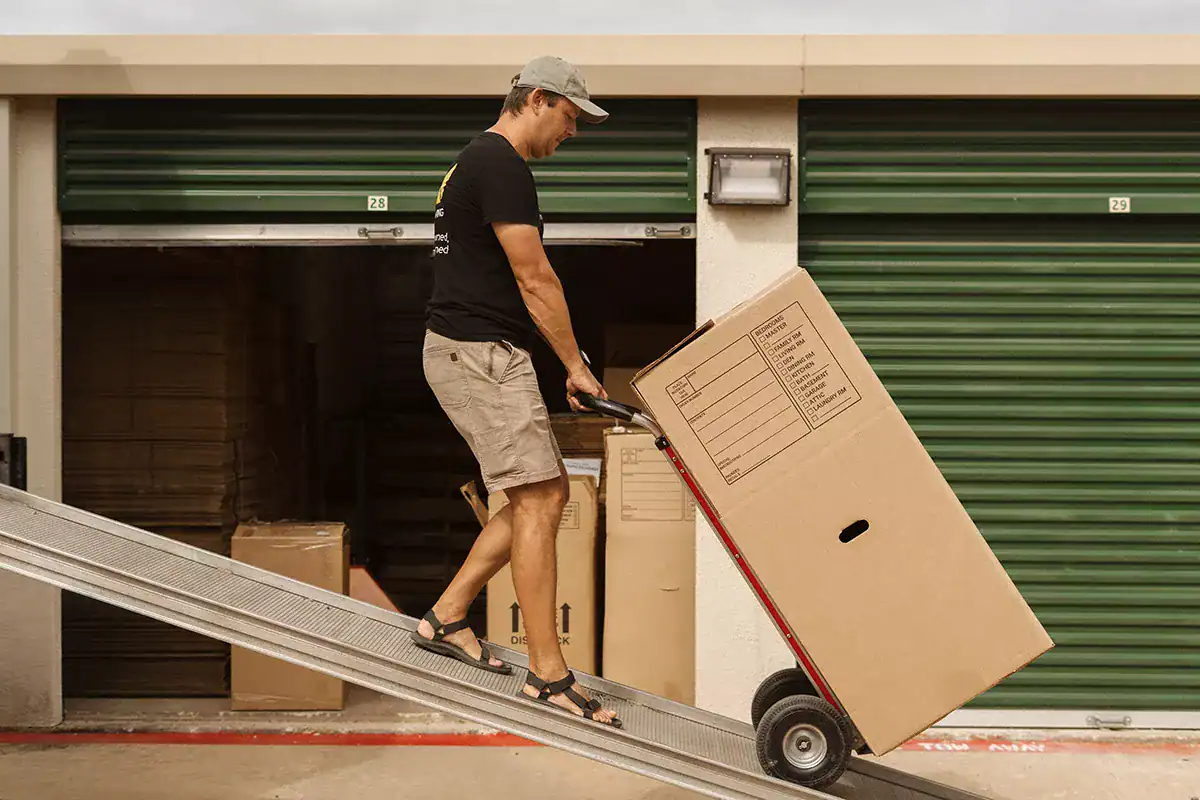
Cedar Park move days are mostly neighborhood moves in newer subdivisions, which means stairs, two-story floor plans, and homeowners’ association guidelines about truck parking and move hours. We confirm those rules and the parking situation before the crew arrives.
Terrain matters more than people expect. The land rises toward the Hill Country on the west side, and some neighborhoods sit on real grades with steep driveways. We scout access and bring the right vehicles. Traffic on US 183 and 183A is the other variable, and we time the route around the commuter peaks.